

Requirements for Electronic Component Development - High Thermal Conductivity Interface Materials
The emergence of IoT technology has brought changes to life, especially after the integration of networking with information, communication, and automotive electronics technology. This will affect the safety and reliability design of components. How to continuously develop the design of electronic components towards multifunctionality and compactness in response to the demands of new applications, while enhancing the performance of end products, has always been a key focus in product development, with thermal management being a significant topic.
The ITW THERMALESS series products represented by Sil-More Group use a non-silicone synthetic oil as a carrier. In addition to being free of low molecular silicone, they also exhibit excellent resistance to pump-out and outstanding thermal resistance performance. When applied to closed or optical products, they do not cause contact failures or contamination of optical components, and they also demonstrate very good stability under long-term high-temperature testing of 1000 hours at 85°C.
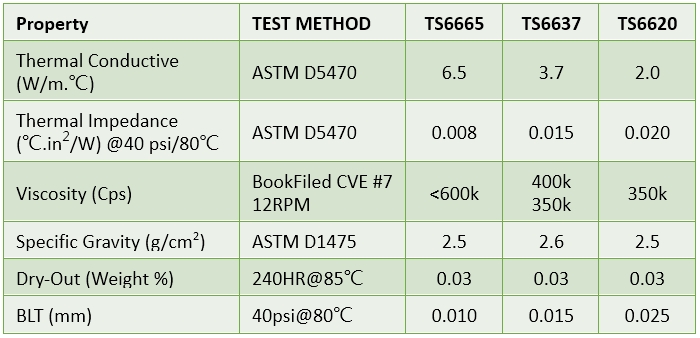
The ITW THERMALESS series thermal paste uses high thermal conductivity fillers such as graphene and aluminum nitride as conduction media, which not only improves thermal conductivity but also significantly enhances the practicality of the products for use in automation equipment. Application fields include CPUs, power management modules, high-frequency communication components, servers, and automotive lighting.
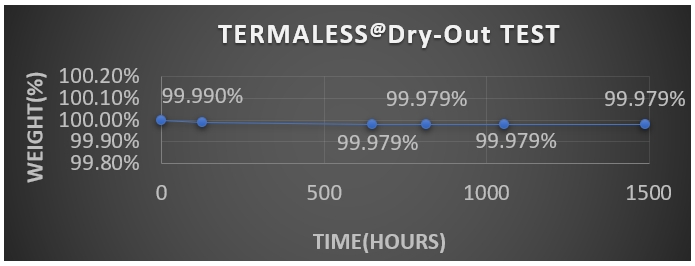
Data source: Provided by ITW.


China Kunshan Subsidiary
TEL:+86-512-5778-9977
FAX:+86-512-5778-9944
E-Mail:silmore@silmore.com.cn
Website:http://www.silmore.cn/
Address: 13th Floor, Building 4, Chengbei Lake Commercial Center, 1188 Chengbei Road, Yushan Town, Kunshan City, Jiangsu Province, 215300
China Dongguan Subsidiary
TEL:+86-769-8541-8158
FAX:+86-769-8541-9158
E-Mail:service@silmore.com.cn
Website:http://www.silmore.cn/
Address: No.8 Huafu Road, Shangsha No.6 Industrial Zone, Chang 'an Town, Dongguan City, Guangdong Province, China 523000