
Sil-More Electronic Newsletter - Issue 28: Stator Potting Adhesives in Drive Motor Systems
2020/12/16|Subscribe to the newsletter
Current issue index
 Stator potting in drive motor systems

With the rapid development of vehicle networking technology, many automotive manufacturers and component suppliers are facing increasing high power requirements to ensure the performance of motor components and the entire vehicle. In contrast, the motor system in vehicles needs better heat dissipation performance during high-speed operation, so the design of the motor cooling system will directly affect the safe operation and service life of the motor, which is currently a challenge in thermal management for motors.Due to the losses generated by the motor stator and stator windings in the drive motor system during operation, these losses dissipate as heat, requiring effective cooling media and methods to carry away the thermal energy. To address this heat dissipation issue, Sil-More represents the Henkel Group's brand Araldite CW30334 / Aradur HW30335 potting adhesive. This thermosetting epoxy resin has excellent crack resistance, high thermal conductivity, heat resistance, impregnation properties, quick filling, and chemical resistance. This application in the assembly of drive motor stators for new energy vehicles can improve the motor's heat dissipation system, extend service life, and enhance the performance of various components in the transmission system. It is also suitable for thermal potting of circuit board components, power modules, connectors, sensors, transformers, and industrial controllers to meet the solutions for existing motors, power supplies, and power battery products.
Sil-More Group continuously seeks better thermal management performance materials through connections with the industry chain to meet the material requirements of end products. This time, in collaboration with Henkel Advanced Materials, we are authorized to represent Araldite® motor potting adhesive, leveraging our long-term accumulated expertise, innovative technology, and one-stop service in the power and automotive electronics fields to respond to the rapidly changing new energy vehicle industry and provide the most timely material supply.
Product information is as follows:
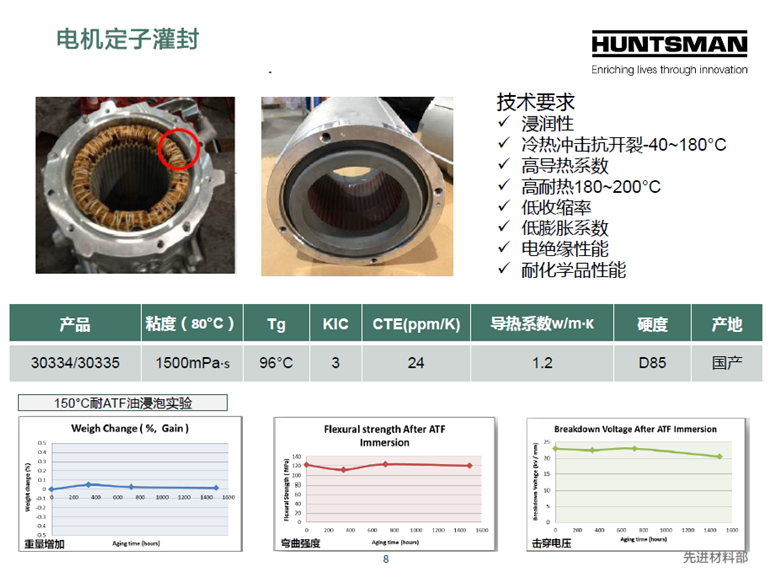
Data source: Henkel Group press release and technical information https://reurl.cc/ld15g6
─Written by: Marketing Department
The era of fast charging under the development of new energy vehicles
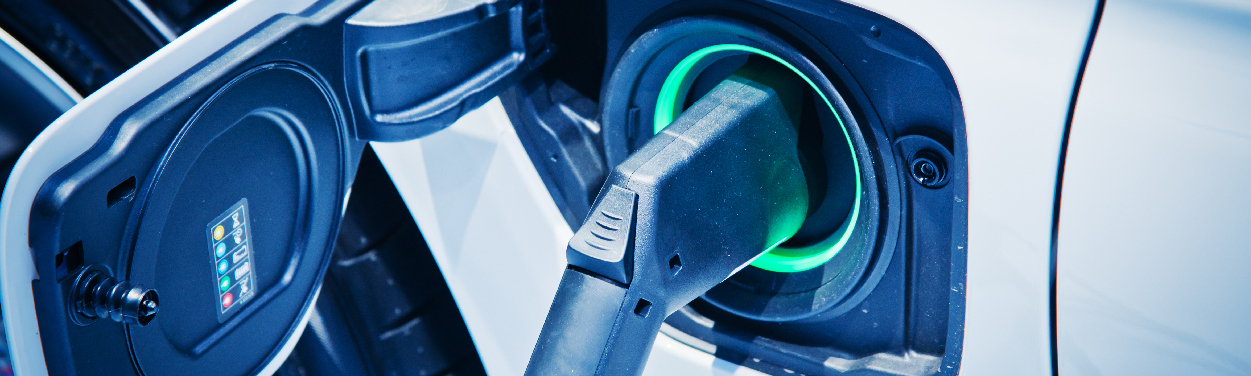
As the electric vehicle industry accelerates towards a new era of energy saving, high efficiency, and intelligence, by 2020, in addition to early electric vehicle manufacturers, traditional manufacturers have also joined the new energy vehicle market, successively launching their own products. Not only price and performance, but also the battery range and charging time of electric vehicles are major considerations for consumers when purchasing electric vehicles. The degree of establishment of a complete charging station will greatly enhance the popularity of electric vehicles and significantly benefit the electric vehicle market.
Many car manufacturers are addressing the current issue of insufficient electric vehicle range by providing larger capacity battery solutions, but the convenience of charging relies on external charging stations. Therefore, charging station solutions can generally be divided into two directions: increasing the number of charging stations and launching fast charging equipment solutions.
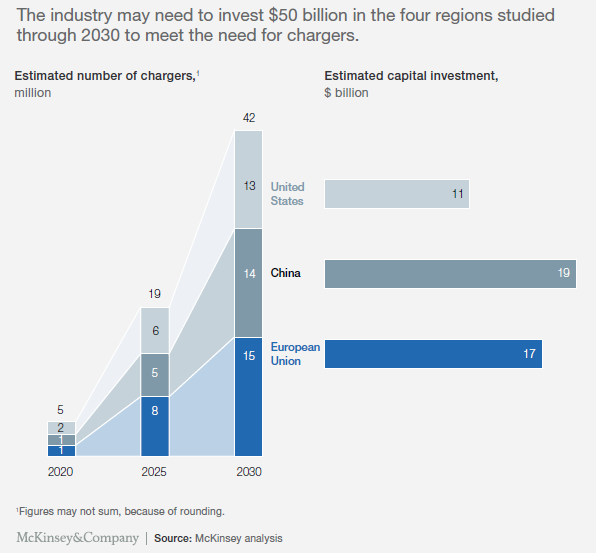
Estimated growth of charging station numbers
According to McKinsey's August 2018 report 'Charging ahead: Electric-vehicle infrastructure demand', it can be seen that the investment in charging equipment will increase exponentially from 2020 to 2030.
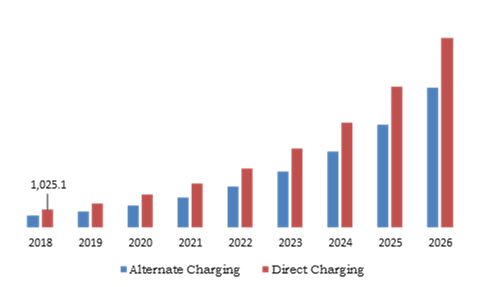
EV Charging Infrastructure Market Segmentation
The market share of DC charging systems in the EV charging infrastructure is anticipated to grow at a CAGR of 34.0%, generating a revenue of $10,688.7 million during the forecasted period.
Charging pile specifications
Due to different cooperation strategies among car manufacturers, various specifications of charging connectors have emerged. Based on mainstream vehicle models sold internationally, charging specifications can generally be divided into the following types:
1. Japanese standard CHAdeMO (supports only DC)
2. American standard SAE J1772 (supports only AC)
3. European standard IEC 62196 (supports both AC and DC)
4. Chinese GB/T (supports both AC and DC)
5. Tesla proprietary specification (supports both AC and DC)
6. Universal specification CCS1/CCS2 (supports both AC and DC)
The illustration is as follows:
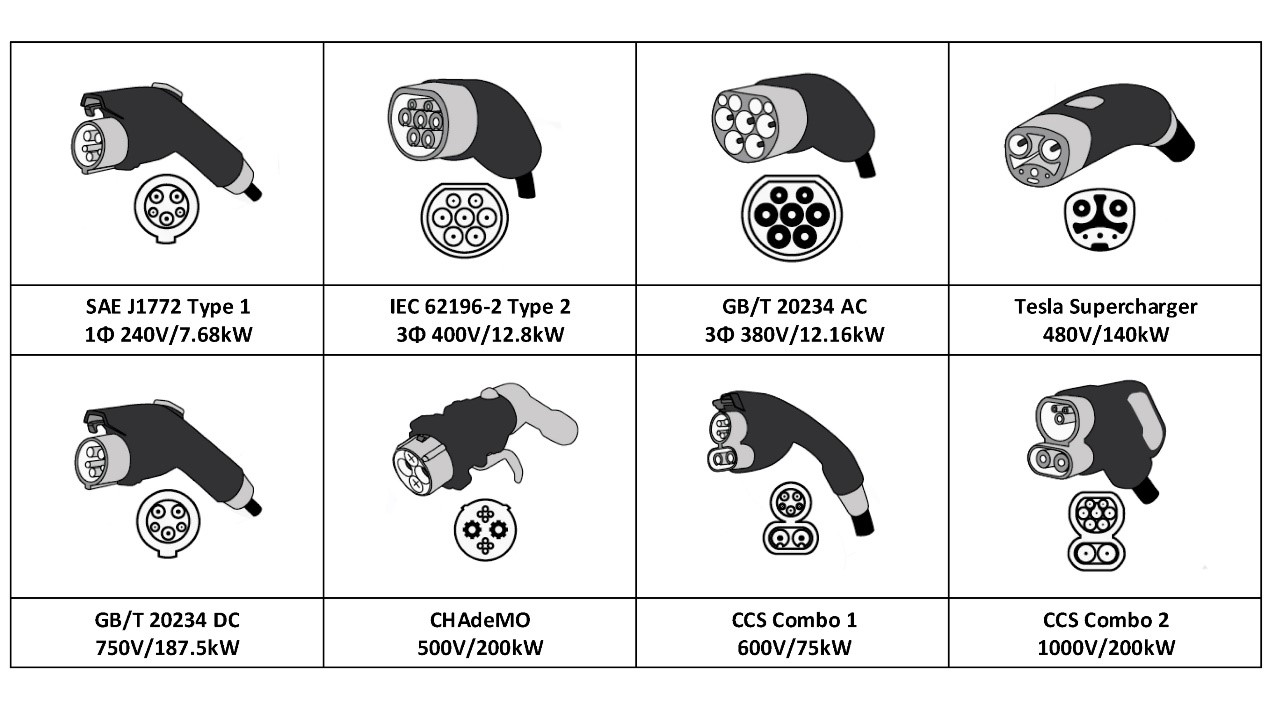
Although there are currently many specifications for electric vehicle charging, they can generally be categorized into four major specifications: Tesla proprietary Supercharge, European/American standard CCS, Japanese/Korean CHAdeMO, and Chinese GB/T.
The CCS1 or CCS2 charging specifications in Europe and America are shared specifications jointly developed by car manufacturers such as Audi, BMW, Daimler Group, Ford, GM Group, Porsche, and Volkswagen, which can be compatible with the American SAE J1772 or European IEC 62196.
Requirements for fast charging station design
Fromthe above relevant data, we know that DC fast charging stations will be the future trend. So, are there any special points we need to pay attention to regarding DC fast charging stations?
Heat dissipation issues will be one of the challenges that must be solved during the development of DC fast charging stations!
As the charging speed increases, the heat generated by the power module components in the charging gun of the charging station becomes greater. Among them, during fast charging, the high-power power transmission process will cause high heat issues in the charging gun. To quickly solve the temperature problem, the current industry solutions are water cooling or oil cooling systems. By using a motor to drive the water cooling liquid or oil cooling liquid, a rapid heat conduction effect can be achieved, preventing the charging gun from accumulating heat and causing safety or performance issues.
Sil-More Group not only provides material options applicable to water cooling or oil cooling but also offers various thermal management materials, such as printable thermal conductive silicone pads, thermal grease, and thermal adhesive, which are applied between electronic components and heat sinks. Through good thermal conductivity and adhesion, heat is transferred to the heat sink, thereby improving the heat dissipation efficiency and service life of the charging module; at the same time, it has functions such as chip heat conduction, power encapsulation, insulation protection, and fixing electronic components, making the use of charging stations safer. As a comprehensive expert in electronic application adhesives, Sil-More is happy to share information with all industry colleagues if advanced industry players encounter related issues.
Data images and sources: https://reurl.cc/q8E1V3
https://reurl.cc/VX950A;https://reurl.cc/LdE7nK
https://reurl.cc/x0RE31;https://reurl.cc/7oa3Vd
─Written by: Domestic Business Department
China GB national standard VOCs - mandatory limit standards
 【What are VOCs?】:
Volatile Organic Compounds (VOCs): According to the World Health Organization's definition, if a compound has a boiling point between 50°C and 250°C at a pressure of 101.32 kPa, it is considered a volatile organic compound. However, the definitions of VOC conditions vary slightly among different organizations. The Chinese national standard for VOCs defines VOCs as the mass of volatile organic compounds present in a unit volume or unit mass under specified conditions. (The conditions for VOCs in China differ from those in the United States and Hong Kong).【Why limit VOCs?】:
The Ministry of Ecology and Environment of China has established national GB (VOCs) management standards to reduce the content of volatile organic compounds in the air to implement the "Three-Year Action Plan for Winning the Blue Sky Defense War" and to reduce the impact of ozone pollution.【What is the effective date of China's VOCs national standard?】:
China fully implemented the national standard GB (VOCs) management standards starting from December 2020, regulating all raw materials containing VOCs, such as coatings, inks, adhesives, and cleaning agents.| Standard Number | Standard Name | Release Date | Implementation Date |
| GB 18581-2020 | Limit of harmful substances in wood coatings | 2020/3/4 | 2020/12/1 |
| GB 18582-2020 | Limit of harmful substances in wall coatings for buildings | 2020/3/4 | 2020/12/1 |
| GB 24409-2020 | Limit of harmful substances in vehicle coatings | 2020/3/4 | 2020/12/1 |
| GB 30981-2020 | Limit of harmful substances in industrial protective coatings | 2020/3/4 | 2020/12/1 |
| GB 33372-2020 | Limit of volatile organic compounds in adhesives | 2020/3/4 | 2020/12/1 |
| GB 38507-2020 | Limit of volatile organic compounds (VOCs) in inks | 2020/3/4 | 2021/4/1 |
| GB 38508-2020 | Limit of volatile organic compounds in cleaning agents | 2020/3/4 | 2020/12/1 |
【What is the scope of application of China's VOCs national standard?】
All coatings, inks, adhesives, cleaning agents, etc., exported to China, and produced or used in China must comply. (Legal scope: not only those exported to China but also those manufactured and used in China)【How is the total VOC limit determined in China's VOCs national standard?】
It is based on the applicable types, categories, and application ranges of materials (coatings, inks, adhesives, cleaning agents) to determine the limit quality. For example: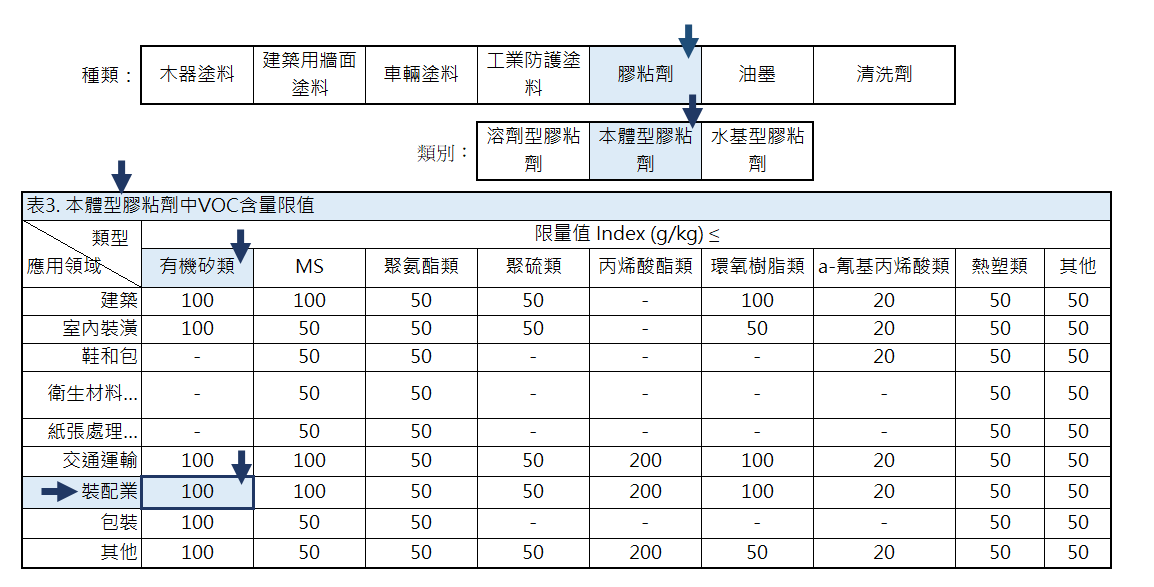
【Does China's VOCs national standard only limit total VOCs?】
China's VOCs national standard does not only limit the total VOCs of materials. It also restricts the content of different other harmful substances (such as: benzene, toluene, xylene, halogenated hydrocarbons, etc.) based on different types and categories of materials (coatings, inks, adhesives, cleaning agents), with different limits. The determination method is generally similar to the above process (type → category → type → harmful substances and their limits). For detailed specifications, please refer to the VOCs national standard.【Sil-More Group's Response】
Sil-More Group has rich experience in adhesive and coating applications and keeps up with the latest trends. We have checked the adhesives, coatings, and cleaning agents we sell, and they generally comply with VOCs management standards. Even for products that do not comply, we provide alternative solutions. Feel free to consult us, and Sil-More Group will provide you with professional technical services.※Data source: Wikipediahttps://reurl.cc/Z7mjl3China regulations website:https://reurl.cc/odjxvD
─Written by: Quality Management Department
Extreme Clean. No Plastic - Sil-More three-degree response clean beach action

Sil-More Group participated in the 'Ultra Clean, No Plastic | 2020 Corporate Beach Clean-up Action' organized by Dow Chemical at the Wazaiwei North Dam Beach in Bali District for the third consecutive year.
Sil-More Group embraces the love for the ocean through action, joining the international beach clean-up efforts with thirty-five volunteers, rolling up their pants and sleeves to take practical action, "rejecting pollution and emphasizing social responsibility for environmental protection," and raising awareness for environmental conservation.
Sil-More Group thanks Dow Chemical for gathering several corporate partners to participate together, resulting in about 200 participants for this beach clean-up. After two hours of cleaning, approximately 180 kilograms of beach waste were collected, with the most common items being plastic bottle caps, PET bottles, straws, and plastic bags. Most of these plastic products can be reused, and by implementing 'reducing plastic habits' in daily life, we can significantly reduce harm to the ocean.
Sil-More Group is a professional electronic adhesive material agent, not only specializing in product aspects but also understanding the importance of chemical substance management. In line with government policies, we ensure proper management and legal operations, fulfilling our responsibility to protect health and the environment.
─Written by: Welfare Committee
2021 Sil-More Group exhibition preview
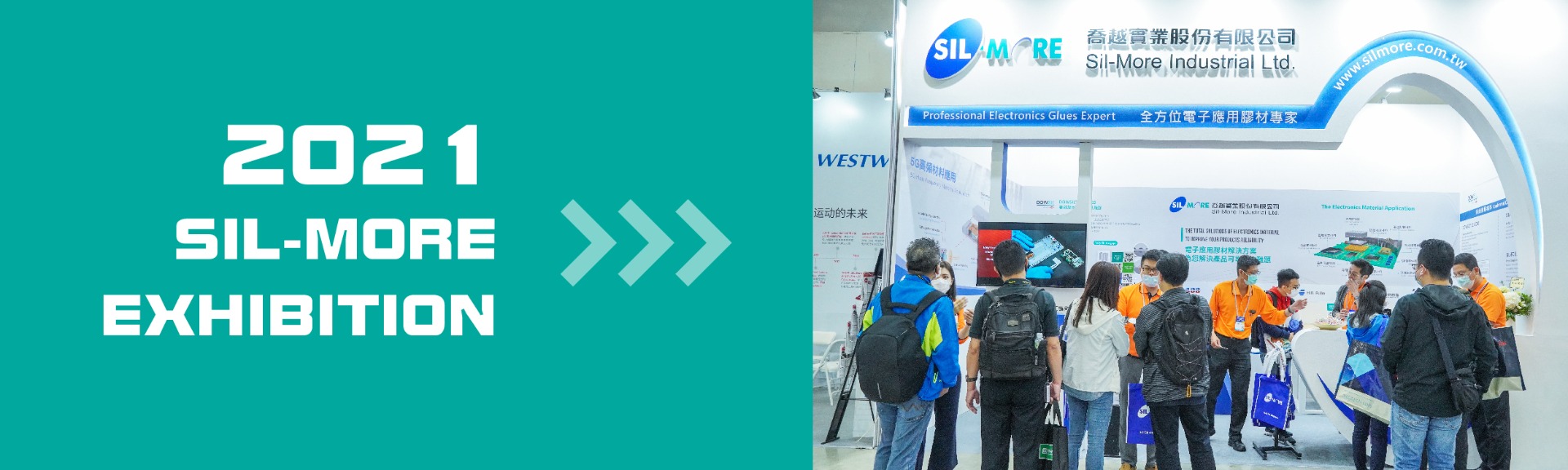
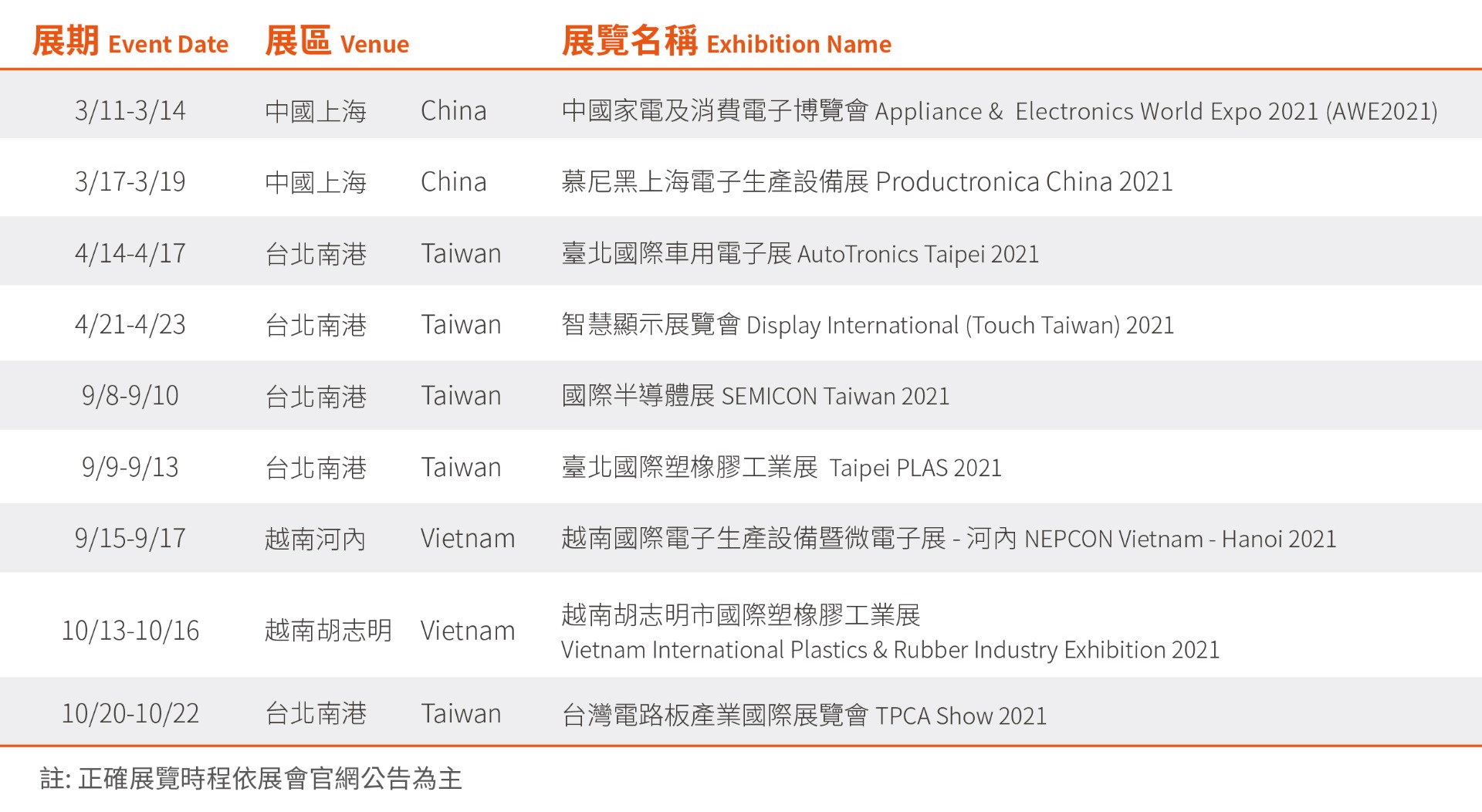
Sil-More Group will showcase key electronic materials and technologies at various exhibitions next year, integrating the upstream and downstream industry chain's adhesive material needs in the manufacturing process, providing the best solutions for all adhesive applications. The exhibition dates are as follows, and you are welcome to visit and provide guidance!
─Written by: Marketing Department

China Kunshan Subsidiary
TEL:+86-512-5778-9977
FAX:+86-512-5778-9944
E-Mail:silmore@silmore.com.cn
Website:http://www.silmore.cn/
Address: 13th Floor, Building 4, Chengbei Lake Commercial Center, 1188 Chengbei Road, Yushan Town, Kunshan City, Jiangsu Province, 215300
China Dongguan Subsidiary
TEL:+86-769-8541-8158
FAX:+86-769-8541-9158
E-Mail:service@silmore.com.cn
Website:http://www.silmore.cn/
Address: No.8 Huafu Road, Shangsha No.6 Industrial Zone, Chang 'an Town, Dongguan City, Guangdong Province, China 523000