

Sil-More Newsletter - Issue 10 New Vehicles Must Be Equipped with TPMS
2016/05/11|Subscribe to the newsletter
HOT! New vehicles in July 2016 must be equipped with TPMS, otherwise they cannot be registered.
 New vehicles in July 2016 must be equipped with TPMS, otherwise they cannot be registered.
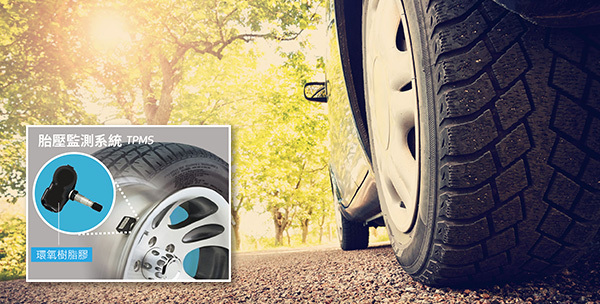
The United States and the European Union have stipulated that all new M1 models must be equipped with TPMS since 2008 and 2012 respectively. Starting from November 2014, all new cars sold in the EU must also be equipped. In Asia, South Korea has legislated in 2013, while Japan, China, and India are expected to implement it in 2017, 2018, and 2019 respectively.
Driving safety first line: Eliminate the nightmare of tire blowouts.
Tire Pressure Sensors (TPMS) are installed inside the car tires to monitor tire pressure and temperature in real-time. They transmit specific communication codes to the receiver inside the car via RF, allowing the driver to know the current status of the tires, reducing the likelihood of accidents. In addition to safety, TPMS can improve fuel efficiency by about 2% on average, reduce carbon dioxide emissions, save fuel, and protect the environment, which is one of the important reasons for various countries to legislate TPMS as standard equipment.
Traditional tire pressure sensors are one-to-one types, mainly designed for specific original factory models, primarily supplied to the OE market, with each sensor having a unique ID code. However, in the AM market, repairs often fail to detect tire pressure sensors due to different specifications. Therefore, using one-to-one tire pressure detectors for different models can lead to a significant increase in inventory of tire pressure detection systems (RF Coding Device for TPMS) from tire manufacturers. Thus, universal tire pressure sensors were born, which can detect unspecified vehicle types, mainly using cloud-based technology for decoding, recorded on blank sensors, so universal tire pressure detectors are mainly supplied to the AM market.
Each TPMS sensor will stop working due to battery depletion. The battery is designed to last 10 years, with an average lifespan of about 5-7 years. When the battery life of the TPMS ends, the alarm display inside the car will light up, indicating that it needs to be replaced. Since being designated as 100% standard equipment in 2007, over 400 million tire pressure detectors have been on the road. It is estimated that the replacement market for tire pressure detectors in the United States will peak after 2017, with stable growth each year. The EU began legislating to promote TPMS in November 2012, and in November 2014, it stipulated that tire pressure detectors would be standard equipment. With an estimated 10 million new cars sold annually in the EU, the market demand is about 40 million units.
Embedded aesthetics, valve type convenience: Options for external TPMS.
Although the Ministry of Transportation's regulations on TPMS tire pressure detection systems, whether in the first phase of November 2014 or the comprehensive implementation in 2016, mainly target the specifications for new car factory equipment, for safety reasons, if a driver's beloved car does not have a TPMS device, it can still be added externally. Currently, there are two main forms: valve type and embedded type. U-CAR has also made a simple comparison of the two types of external TPMS systems.
Comparison of external TPMS tire pressure detection systems | ||
Common forms | Embedded type | Valve type |
Appearance |
|
|
Installation |
|
|
Advantages |
|
|
Disadvantages |
|
|


TPMS testing specification conditions
1. TCTS (thermal shock): -40~125°C 1000 cycles, the adhesive material must not crack. 2. Centrifugal heating test: 2700rpm 80 degrees 8 hours, the adhesive material must not crack. 3. Ten types of oil resistance tests: the adhesive material must not be eroded. 4. Frequency test: Currently, RF transmission is used, so interference must not exceed 0.3dB.
Data source:http://www.cubautoparts.com/intro.phphttp://news.u-car.com.tw/24473.html
─Author: Product Promotion Department, Zhan Yuchuan, Burgess Chan, Product Promotion Department, Zhuang Renli, Jack Juang
Application of new materials in smart electric vehicles
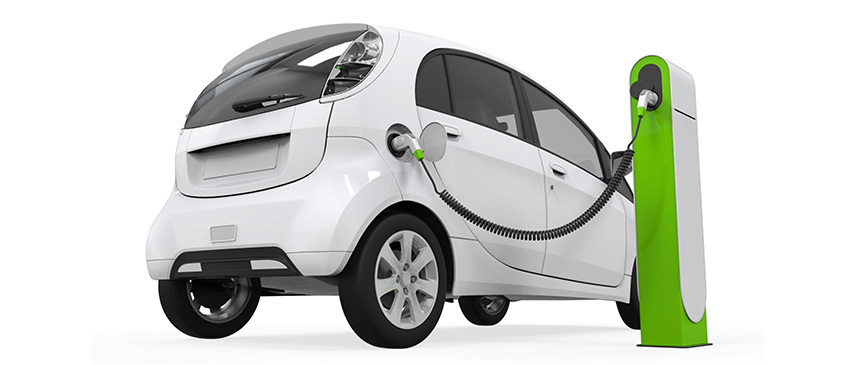
In recent years, the increasingly severe global warming phenomenon and oil crisis have led to a growing awareness of environmental protection in various countries, all seeking energy-saving and environmentally friendly alternative energy sources to slow down the pace of global warming and sustain national development. Coupled with various governments actively promoting smart electric vehicle policies, car manufacturers are vigorously designing and developing electric vehicles, thus requiring the application of new materials in various modules to be more competitive and reliable to meet the high specifications of future smart electric vehicles.
| Application materials related to power battery modules: | Application materials related to automotive LED headlight modules: |
|
|
| Application materials related to insulated gate bipolar transistors: | Application materials related to automotive reversing camera modules: |
|
|
| Application materials related to tire pressure monitoring modules: |
| (PA66+GF30%)+PCBHigh strength potting glue |
─ Author: Business Department Lin Yuanzhang Eric Lin
Development of heat dissipation technology for automotive lighting modules
As the LED lighting application approaches saturation, manufacturers are starting to focus on other markets, and the profitability related to automotive LEDs is promising, attracting many manufacturers to invest. The automotive LED market can basically be divided into OEM and AM, with Taiwanese manufacturers holding about 80-90% of the global market share in the electronic component AM market, but it is relatively more difficult to enter the OEM or Tier 1 supply chain. Among all automotive LED applications, daytime running lights and headlights, which belong to the exterior lighting system, are currently key development applications. With the trend of performance improvement and price competition, they have gradually become popular in mid to low-end vehicle models, and under favorable market conditions, stable development is expected.
Since the world's first LED third brake light was introduced in 1986, the development of LED car lights has reached over 70% market application in taillights. Currently, manufacturers in the emerging market for LED car lights are focusing on daytime running lights and headlights. In terms of daytime running lights, due to regulatory requirements in Europe and the United States, their market share has seen significant growth. For headlights, the design has progressed from traditional reflective types to projection types, and with the modular characteristics of LEDs, AFS steering and matrix headlight designs have been developed. With technological advancements, LED car lights can now achieve localized shielding effects and can detect road conditions at any time through sensing modules, providing optimal and safe lighting for drivers and the surrounding environment.
AFSSteering and matrix headlight design
(Source of the image:http://www.carnews.com/news/article/42037)
With the increasing attention on high power and high brightness LEDs in the car light market, the luminous efficiency and lifespan of LEDs decrease with rising temperatures, which has always been a concern for manufacturers. Effectively reducing the temperature of LEDs will be an important issue for their application in car lights.
Currently, the heat dissipation method for LED car lights involves transferring the heat generated by the operation of the LED chip on the module to the heat sink through thermal interface materials, and then dissipating heat through active or passive cooling designs on the heat sink. Thermal paste and thermal pads are commonly used interface materials for LED modules, primarily used to fill the micro-gaps and uneven surfaces that occur when two metal interfaces contact, thereby reducing interfacial thermal resistance and improving the heat dissipation performance of LED car light modules.
Sil-More further provides non-silicone thermal paste or thermal pads for customers to choose from. Non-silicone thermal interface materials, in addition to having the characteristics of general thermal interface materials, do not contain the common silicone components found in general thermal materials, making them less prone to cracking within the temperature range and preventing other volatile substances from contaminating the light module. Therefore, non-silicone materials have become the specified thermal interface materials for many customers on LED modules.
The technical reliability requirements for LED car light modules are very high. The products not only aim for high specifications and lightweight designs, but the heat dissipation design technology is also crucial. How to reduce thermal resistance through integrated system design is even more important for the overall product lifespan in the future.
─ Author: Product Promotion Department Chen Boteng Porter Chen
Quality Assurance Laboratory Case Sharing: Silicone Resin Adhesive Removal Testing
Polymer adhesive removal generally achieves the cleaning effect through several principles:1. pH value: Acidic and alkaline environments can accelerate the oxidation of adhesive materials, breaking bonds, and heating can improve efficiency. Generally, silicone resins are recommended to be used with alkaline solutions, while organic adhesives such as epoxy resins, PU glues, acrylic glues (UV glues, quick-drying glues, anaerobic screw glues) can be more effectively removed with acidic solutions.
2. Polarity: Selecting organic solvents with polarity similar to that of the adhesive material can directly dissolve and remove it, and heating can increase solubility. Most polymers are more suitable for low-polarity solvents such as toluene and n-hexane.
3. Pore absorption: High molecular polymers have fine pores, and when soaked in solvents, they absorb and expand in volume, weakening molecular bonds, making it easier to remove the adhesive.
This time, several different silicone resins were selected for application, such as sealant 3140, coating glue 1-2577, LED packaging glue OE 6351 and OE 7662, and potting glue 160. The above adhesives were applied to glass slides and cured to make samples, which were then soaked with different adhesive removers to compare which one had the best adhesive removal effect.
Product Name | DS2025a | DY220a | DY225a | DY180a | DIGSILa | DY711b | DY2000b |
3140 | ○ | ○ | ○ | x | ○ | ○ | △ |
1-2577 | ○ | ○ | ○ | △ | x | ○ | ○ |
OE 6351 | ○ | ○ | ○ | x | ○ | △ | △ |
OE 7662 | x | △ | ○ | △ | x | ○ | ○ |
160 | ○ | ○ | ○ | x | ○ | △ | △ |
△: Surface softening requires forceful wiping
x: No change at all or only slight surface corrosion
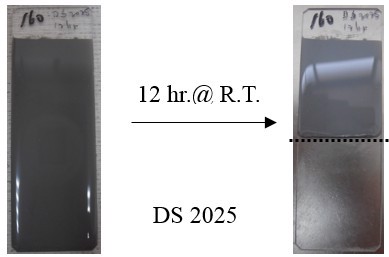
Cross-reference the table above, DY711 has good and fast glue removal effect but requires heating during use, while DY225 has the best glue removal effect at room temperature. Each type of adhesive has its suitable adhesive remover. With a basic understanding of the glue removal principle, combined with practical testing, one can have more direction in selecting adhesive removers.
─Written by: Technical Department Edmund Wu
Sil-More Company Long-term Employee Gold Medal Award
On the occasion of the 20th anniversary of Sil-More Company, in conjunction with the year-end banquet for all employees and their families, gold medal awards are presented to long-term employees with five, ten, fifteen, and twenty years of service, in appreciation of their continued support and recognition of the company's business philosophy of "Integrity", "Harmony", "Proactivity", "Professionalism", "Service", and "Innovation".Sil-More Company is a leading supplier of electronic high-tech industry adhesives, established in 1995, and has always adhered toSelect"Recruitment",Use"Evaluation",Cultivate"Training",Retain"Incentive" spirit, growing from 4 employees at the beginning to over 200 excellent professionals in various fields today. Sil-More Company hopes to continue cultivating more talents for the electronic adhesive industry.
General Manager Yang Tianxiang poses for a photo with employees who have served for five years.

─Written by: Marketing DepartmentGO TOP


China Kunshan Subsidiary
TEL:+86-512-5778-9977
FAX:+86-512-5778-9944
E-Mail:silmore@silmore.com.cn
Website:http://www.silmore.cn/
Address: 13th Floor, Building 4, Chengbei Lake Commercial Center, 1188 Chengbei Road, Yushan Town, Kunshan City, Jiangsu Province, 215300
China Dongguan Subsidiary
TEL:+86-769-8541-8158
FAX:+86-769-8541-9158
E-Mail:service@silmore.com.cn
Website:http://www.silmore.cn/
Address: No.8 Huafu Road, Shangsha No.6 Industrial Zone, Chang 'an Town, Dongguan City, Guangdong Province, China 523000