
Sil-More Newsletter - Issue 9: Reducing the Harmful Effects of LED Blue Light on the Human Eye
2016/06/22|Subscribe to the newsletter
HOT! Materials to reduce the harm of LED blue light to human eyes
2016 Sil-More Group exhibition preview
Exhibition information - You are welcome to visit and provide guidance
 Materials to reduce the harm of LED blue light to human eyes
Blue light accounts for about 1/3 of visible light and is the shorter wavelength part of visible light. Blue light has the characteristics of shorter wavelength and stronger energy, and long-term exposure to blue light can cause chronic damage to the macula of the eyes; due to the short wavelength of blue light, it is prone to chromatic aberration, which can cause dizziness when irradiating the eyes. With the advancement of technology, LEDs are widely used in 3C products, including LCD TVs, computer screens, smartphones, and tablets, and these LEDs emit a lot of ultraviolet and blue light, which can easily harm the eyes with long-term use. Macular degeneration, which used to occur mostly in the elderly, is now showing a trend of occurring in younger people, and thus blue light protection has become an important issue for the 3C industry and various lens manufacturers. As a material supplier, Sil-More Company should take on the relevant social responsibility to reduce the harm of materials to human health. We have independently developed additive materials that shield wavelengths below 475nm, 450nm, and 430nm.In the past five years, LED semiconductor lighting technology has made significant progress towards replacing traditional lighting sources. Countries have gradually phased out incandescent bulbs, reduced the use of mercury-containing lamps, and established low-energy lighting standards, greatly increasing the market share of LED lighting products. In the past two years, many anti-blue light products have appeared on the market, such as anti-blue light lenses, low blue light screens, and low blue light LED lighting products, all of which are considered for daily life. Due to the large penetration of LED lighting products, the main blue light component of LEDs may cause visual damage to the human eye, leading to the emergence of related products.
To further discuss the mechanism of how the human eye receives light, we must first talk about the characteristics of light. Generally speaking, the electromagnetic radiation that the human eye can perceive is the light that people are most familiar with, with wavelengths ranging from 400 to 750nm, which can be further divided into red, orange, yellow, green, blue, indigo, and violet. Among them, red light has the longest wavelength, and violet light has the shortest. The wavelength of 550nm is the part where the human eye has the best sensitivity, presenting yellow-green light. The seven colors of light can be combined to form white light, and white light can be split into the aforementioned seven colors through a prism. Therefore, visible light not only provides the necessary energy for the survival of plants and animals but also primarily serves to provide energy that allows objects to appear colorful, enabling the human eye to see and distinguish objects. Since the ozone layer in the atmosphere absorbs wavelengths of 286nm, most of the wavelengths above 286nm that the human eye comes into contact with fall within the range that the human eye can receive. Among them, the harm caused by light to humans decreases with increasing wavelength. In other words, shorter wavelengths in the visible spectrum pose a higher potential danger, mainly because photons carry more energy.
Development of LED white light sources
LEDs are basically monochromatic chips or combinations with phosphors to produce specific light-emitting wavelengths. The main principle is that the main wavelength emitted by the semiconductor chip is determined by the energy gap of the semiconductor, which releases energy through electron transitions and excitations.
Among them, household LED products use chips to emit blue light, which is converted to white light through a phosphor coating. Although the light perceived by the naked eye appears white, it still contains a significant amount of blue light in the wavelength range of 460 to 500nm, which has been shown to have unique physiological effects. Such white light LEDs, when used as a new light source irradiation system, initially show that they may affect the production of melatonin and the changes in human interference potential. According to recent research by sleep scholars, this directly affects the response of eye cells to light, including increasing the risk of damage to retinal cells.
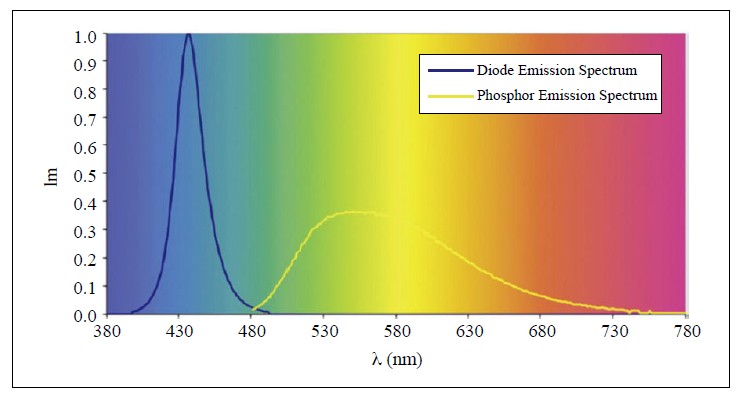
The impact of blue light on the human eye's macula
For human eye use, blue light is the strongest energy visible light. When visible light enters the macula, it forms images and colors, allowing the human body to have vision. Among other types of light, infrared light generates heat, which may cause burning or injury to the eyes; ultraviolet light is blocked and absorbed by the cornea and lens, but the lens ages and becomes cloudy over time, leading to cataracts.
Generally speaking, blue, indigo, and violet light can penetrate the cornea and lens directly into the macula, causing damage to the photoreceptor cells in the macula. Age-related macular degeneration is a disease caused by aging. Long-term direct viewing of 3C product screens causes chronic stimulation, leading to inflammation and edema in the macula, which may form a hidden lesion in the center of the macula. If the hidden lesion ruptures and causes bleeding, it will result in central vision loss, making it impossible to see things clearly with the eyes, ultimately leading to a condition where one can only see things with a squint, akin to blindness.
Another reason blue light harms the eyes is that its shorter wavelength easily causes scattering, requiring the eyes to focus harder. Over time, the ciliary muscles become tense and cannot relax, leading to eye fatigue and soreness, and possibly causing pseudomyopia. Simultaneously looking at 3C products and books for 6 hours causes the pupils to constrict, resulting in greater eye fatigue.
Conclusion
Since 2010, several countries and research institutions have begun to study the impact of blue light on the human eye. This has gradually gained attention since the development of the fourth type of semiconductor lighting source. Especially for our country, which is primarily focused on the development of the LED industry, in-depth exploration of blue light research is important for reducing harm to the human eye in subsequent lighting and display system developments or exploring actual impacts. Currently, most research on blue light hazards is primarily focused on animal experiments, and due to safety issues in human experiments, there are few related research reports that reveal the actual impact on the human eye.
At the same time, some LED manufacturers have begun developing low blue light products to reduce concerns about product use, including manufacturers of displays and lighting fixtures, while establishing product differentiation, striving for high value, health, and comfort in the lighting environment. In the absence of clear conclusions and regulations regarding blue light research, proactive measures are taken to prevent harm to the human eye from blue light.
Acknowledgments: This paper is the result of funding from the Energy Bureau of the Ministry of Economic Affairs for the LED lighting and system energy-saving research and development project. Thanks to the support of the Energy Bureau, this research was able to proceed smoothly, and I would like to express my gratitude.
- Source: Industrial Materials Magazine Issue 348 2015/12
- Written by: Product Promotion Department Zhang Renwei Andrew Chang
LED Blue Ocean New Market - Invisible Light Applications
As the application of LED in visible light approaches saturation, manufacturers are actively seeking another blue ocean market for LEDs. Therefore, the business opportunities for invisible light LEDs are gradually being recognized by the market, such as UV LEDs used in curing, medical, sterilization, etc. Another invisible light, IR LEDs, can also be applied in security control and iris recognition markets.In response to the rising market demand for these applications, Sil-More continuously innovates its professional value to serve as a partner for customers in material selection, integrating numerous brand products under its umbrella to provide a systematic product combination and the best solutions to meet customer needs.
In response to wavelengths below 365nm, there are no suitable materials for silicone, whether for encapsulation or die bonding. Therefore, for LED designs that do not use encapsulation glue, Sil-More provides Protavic's die bonding adhesives (conductive silver glue ACH35001LV & ACH35004LV), cavity, and glass adhesives (ATH34064 & ANE34067 & ANH34056), which have already been successfully used by customers.
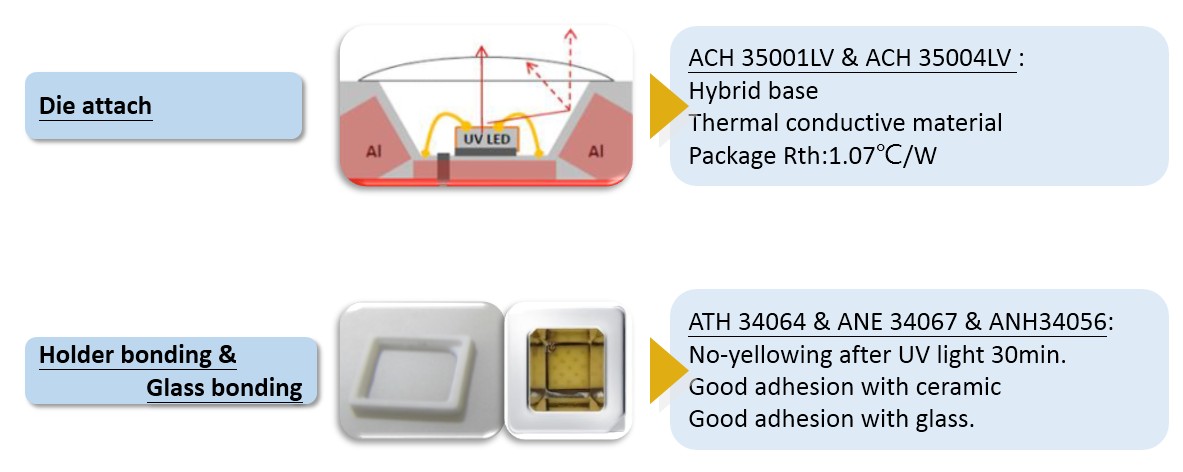
Figure: Application case of Protavic conductive silver glue products
- Written by: Product Promotion Department Yang Xiuyu Afra Yang
Quality Assurance Laboratory Case Sharing - Introduction to Moisture-Curing Resins
Common moisture-curing resins can be divided into the following types: 1. Polyurethane type (Polyurethane Reactive, PUR), such as PUR series products, which are applied in a hot melt adhesive manner, solid at room temperature, and melt when heated to the melting point. The principle is that the functional groups at the end of the polyurethane resin; isocyanate (NCO) reacts with moisture at high temperatures, releasing carbon dioxide to cure. Notably, once the hot melt glue cools and cures, it cannot be remelted, making the reaction one-way and irreversible.Figure 1. Reaction mechanism of isocyanate and water curing
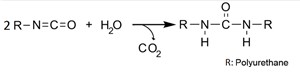
Figure 2. Reaction mechanism of silane and water curing
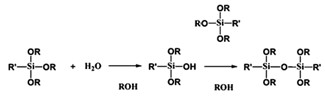
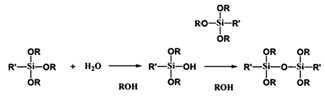
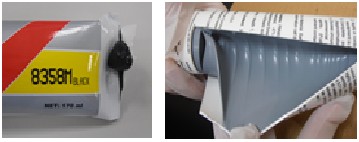
Figure 3. Molecular structure of silane and PU combination
- Written by: Technical Department Wu Sicheng Edmund Wu
Protecting the Environment, Innovative Materials - Solvent-Free Water-Based PU Materials
In the past, traditional solvent-based PU required a large amount of solvent for dispersion and engineering operations, but organic solvents are flammable, explosive, volatile, and have strong odors. During the curing process, a large amount of solvent is released, causing air and ecological pollution, affecting public safety and the health of operators. In the past decade, due to increasing public pressure to protect the Earth's environment, rising environmental awareness, high solvent prices, and heightened industrial safety concerns, some advanced countries have established fire safety regulations and solvent regulations to limit the content of VOCs (Volatile Organic Compounds); thus, the development of solvent-based PU has been restricted, leading to the emergence of research on the preparation and hydrophilization of water-soluble PU.PU can be classified into ester and ether types based on the type of soft chain segments, and can also be divided into aromatic and aliphatic types based on the type of hard chain segments. The different structures significantly affect the physical properties of PU molded products, summarizing the characteristics of various polyol types in Table 1. Generally, polyester-based PU has better heat resistance, tensile strength, and wet molding properties, while ether-based PU has lower low-temperature flexibility and initial elastic modulus, with Poly tetra methylene glycol (PTMG) based PU exhibiting the best chain flexibility and anti-mold properties.
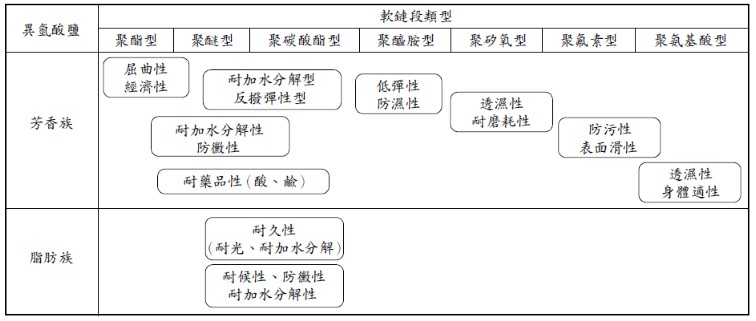
w Table 1: The effect of soft and hard chain segment types on PU properties
- Source: Industrial Materials Magazine Issue 343 2015/07
2016 Sil-More Group exhibition preview
| Exhibition PeriodDate | Exhibition AreaVenue | 2016 Exhibition Name Exhibition Name |
| 3/15(Tue)-3/17(Thu) | ChinaShanghai New International Expo Center China SNIEC | China Semiconductor Exhibition SEMICON China 2016 |
| 4/6(Tue-4/9(Sat) | TaiwanTWTC Nangang Exhibition Center Taiwan TWTC Nangang | Taipei International Automotive Electronics Show AutoTronics Taipei 2016 |
| 4/13(Wed)-4/16(Sat) | TaiwanTWTC Nangang Exhibition Center Taiwan TWTC | LEDProcess Exhibition LED Taiwan 2016 |
| 5/16(One-5/18(Wed) | ChinaShanghai Guangda Exhibition Center China Shanghai Everbright Convention & Exhibition Center | Shanghai International Industrial Automation & Robot Exhibition Shanghai International Industrial Automation & Robot Exhibition 2016 |
| 6/9(Thu-6/12(Day) | ChinaGuangzhou China Import and Export Fair Pazhou ComplexChina Import and Export Fair Complex | Guangzhou International Lighting Exhibition Guangzhou International Lighting Exhibition 2016 |
| 8/24(Wed-8/26(Five) | ChinaShenzhen Convention Center China Shenzhen Convention & Exhibition Center | China International High-tech Achievements Fair(Shenzhen High-tech Fair) China Hi-tech Fair 2016 |
| 8/24(Wed-8/26(Five) | TaiwanTWTC Nangang Exhibition Center Taiwan TWTC Nangang | Smart Display and Touch Exhibition Touch Taiwan 2016 |
| 8/31(Wed-9/3(Sat) | TaiwanTWTC Nangang Exhibition Center TaiwanTWTC Nangang | Taipei International Industrial Automation Exhibition Taipei Int'l Industrial Automation Exhibition 2016 |
| 9/7(Wed-9/9(Five) | TaiwanTWTC Nangang Exhibition Center Taiwan TWTC Nangang | International Semiconductor Exhibition SEMICON Taiwan 2016 |
| 10/26(Wed-10/28(Five) | TaiwanTWTC Nangang Exhibition Center Taiwan TWTC Nangang | Taipei International Circuit Exhibition TPCA Show 2016 |
| 11/8(Tue-11/10(Thu) | ChinaShanghai New International Expo Center China SNIEC | Shanghai Asia Electronics Exhibition Asia Electronics Exhibition in Shanghai(AEES) 2016 |
Exhibition Information - Welcome to visit and provide guidance, for details please click
Hainxin International Exhibition Center N2 Hall /2740 |
|
|
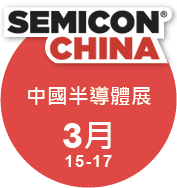
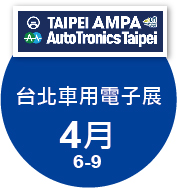 Taipei Nangang Exhibition Center 4th Floor / L0601a
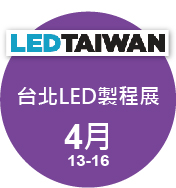 Taipei Nangang Exhibition Center 1st Floor / K0321

China Kunshan Subsidiary
TEL:+86-512-5778-9977
FAX:+86-512-5778-9944
E-Mail:silmore@silmore.com.cn
Website:http://www.silmore.cn/
Address: 13th Floor, Building 4, Chengbei Lake Commercial Center, 1188 Chengbei Road, Yushan Town, Kunshan City, Jiangsu Province, 215300
China Dongguan Subsidiary
TEL:+86-769-8541-8158
FAX:+86-769-8541-9158
E-Mail:service@silmore.com.cn
Website:http://www.silmore.cn/
Address: No.8 Huafu Road, Shangsha No.6 Industrial Zone, Chang 'an Town, Dongguan City, Guangdong Province, China 523000