

Sil-More Newsletter - Issue 3 - Professional Recommendations *Smart Lubricants*
Molykote®Smart Lubricants - Sixty Years of Heritage
In the 18th century, the discovery of 'smooth metal' minerals laid the foundation, and in 1948, Molykote lubricants boasted the launch of 'the purest molybdenum disulfide.' Alpha Molykote introduced it into the lubrication field, subsequently developing many suitable formulations and establishing a strong regional sales support network worldwide. In the 1960s, Dow Corning acquired the Molykote business, further strengthening global marketing and expanding its scope to include silicone lubricants. With new product development and technical support services, the brand gained global market recognition.
Molykote® industrial lubricants include a complete product range of multi-purpose lubricating oils, synthetic oils, ultra-high purity mineral oils, special compounds, greases, pastes, and anti-friction coatings, addressing lubrication wear issues.
<Molybdenum disulfide>
RoHSRestriction of Hazardous Substances Directive
With the advancement of global consumer electronics and the rise of environmental awareness, and due to the impact of the EU's Restriction of Hazardous Substances Directive (RoHS) for electrical and electronic equipment, major brands have proposed even stricter restrictions than RoHS to comply with this environmental trend.
For products to be sold in the EU market, compliance with the RoHS directive is one of the basic requirements, so let's explore the content of this directive. First, this directive was passed by the European Union in 2003 as an environmental directive 2002/95/EC, and was revised again in 2011 to 2011/65/EU. The electrical and electronic equipment involved are as follows:
1. Large household appliances
2. Small household appliances
3. Information technology and telecommunications equipment
4. Consumer equipment
5. Lighting equipment
6. Electrical and electronic equipment
7. Toys, leisure, and sports equipment
8. Medical devices
9. Monitoring and control equipment, including industrial monitoring and control equipment
10. Vending machines
11. Any other electrical and electronic equipment not covered in the above categories.
And the specified voltage does not exceed 1000V (AC) and 1500V (DC), which can be said to cover all daily electrical appliances and consumer electronics.
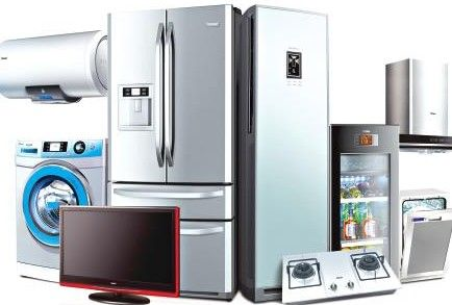
Figure 1, Household appliances, consumer electronics diagram
The prohibited substances and their maximum allowable concentration (weight percentage) in homogeneous materials are listed as follows: Lead (0.1%), Mercury (0.1%), Cadmium (0.01%), Hexavalent chromium (0.1%), Polybrominated biphenyls (PBB) (0.1%), Polybrominated diphenyl ethers (PBDE) (0.1%).
The EU-related websites will regularly update announcements on market spot checks of non-compliant products, making product-related information and exceeding standards clear to consumers, and restricting the sale of products in the EU market. Additionally, many civil organizations within EU countries conduct random investigations in the market and report the results to the EU for publication on their websites. Under this directive and supervision, major brands also manage upstream manufacturers, commonly using third-party impartial organizations to verify restricted substances, with common third-party organizations including: SGS, CTI, Intertek, etc.
The directive 2011/65/EU mentions that in future revisions, hexabromocyclododecane (HBCDD), Bis(2-ethylhexyl) phthalate (DEHP), butyl benzyl phthalate (BBP), and dibutyl phthalate (DBP) may be included in the new restricted substances regulations. The EU is expected to hold another meeting in 2014 to revise the content of this directive.
References: 2011/65/EU Directive
Commercial Times Report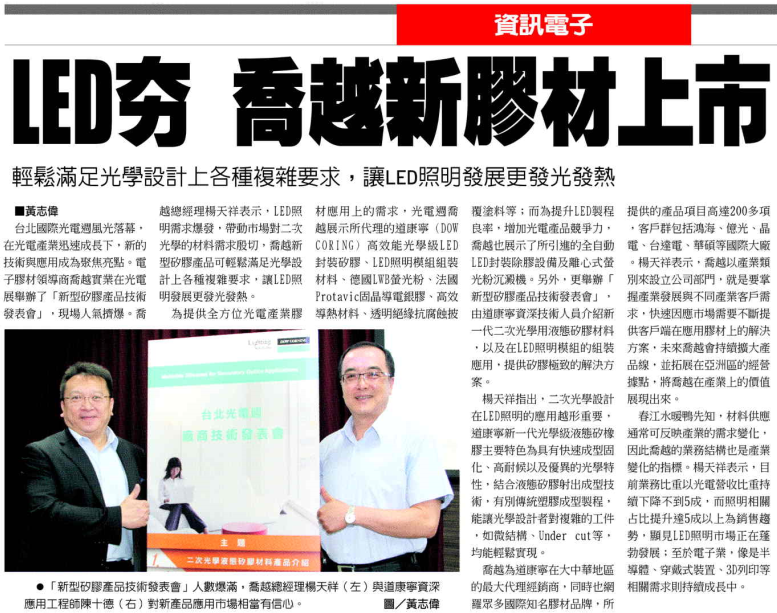
In the 18th century, the discovery of 'smooth metal' minerals laid the foundation, and in 1948, Molykote lubricants boasted the launch of 'the purest molybdenum disulfide.' Alpha Molykote introduced it into the lubrication field, subsequently developing many suitable formulations and establishing a strong regional sales support network worldwide. In the 1960s, Dow Corning acquired the Molykote business, further strengthening global marketing and expanding its scope to include silicone lubricants. With new product development and technical support services, the brand gained global market recognition.
Molykote® industrial lubricants include a complete product range of multi-purpose lubricating oils, synthetic oils, ultra-high purity mineral oils, special compounds, greases, pastes, and anti-friction coatings, addressing lubrication wear issues.
<Molybdenum disulfide>
- The chemical formula MoS2 is a black powder with a metallic luster, belonging to the hexagonal crystal system, and has a slippery feel similar to graphite, making it the strongest lubricating medium on the surface.
- Anti-corrosion, anti-wear, load-resistant, and extreme pressure solid lubricant additives. Suitable for mechanical gears, bearings, bolts, and other assembly maintenance lubrication.
- The temperature range covers (-160℃~1400℃), providing excellent lubrication for equipment under high and low temperatures, high loads, high speeds, chemical corrosion, and ultra-high vacuum conditions.
- Adding it to lubricating oils and greases can enhance lubrication and anti-friction properties, extend lubrication cycles, reduce costs, and improve working conditions.
- It can be applied in industries such as machinery, aerospace, military, and textiles. Additionally, using molybdenum disulfide lubrication eliminates equipment oil leakage and splashing issues, reduces wear on machinery, and extends equipment lifespan and maintenance cycles..
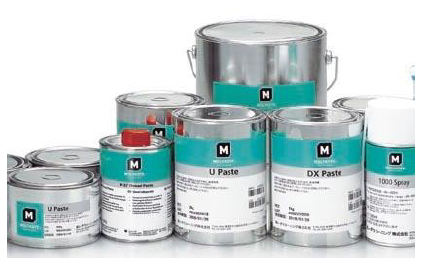
MOLYKOTEPolyolefin (PAO) lubricating grease EM /PG /YM
Perfluoropolyether lubricating grease (PFPE) L/PD/HP/G series
RoHSRestriction of Hazardous Substances Directive
With the advancement of global consumer electronics and the rise of environmental awareness, and due to the impact of the EU's Restriction of Hazardous Substances Directive (RoHS) for electrical and electronic equipment, major brands have proposed even stricter restrictions than RoHS to comply with this environmental trend.
For products to be sold in the EU market, compliance with the RoHS directive is one of the basic requirements, so let's explore the content of this directive. First, this directive was passed by the European Union in 2003 as an environmental directive 2002/95/EC, and was revised again in 2011 to 2011/65/EU. The electrical and electronic equipment involved are as follows:
1. Large household appliances
2. Small household appliances
3. Information technology and telecommunications equipment
4. Consumer equipment
5. Lighting equipment
6. Electrical and electronic equipment
7. Toys, leisure, and sports equipment
8. Medical devices
9. Monitoring and control equipment, including industrial monitoring and control equipment
10. Vending machines
11. Any other electrical and electronic equipment not covered in the above categories.
And the specified voltage does not exceed 1000V (AC) and 1500V (DC), which can be said to cover all daily electrical appliances and consumer electronics.
Figure 1, Household appliances, consumer electronics diagram
The prohibited substances and their maximum allowable concentration (weight percentage) in homogeneous materials are listed as follows: Lead (0.1%), Mercury (0.1%), Cadmium (0.01%), Hexavalent chromium (0.1%), Polybrominated biphenyls (PBB) (0.1%), Polybrominated diphenyl ethers (PBDE) (0.1%).
The EU-related websites will regularly update announcements on market spot checks of non-compliant products, making product-related information and exceeding standards clear to consumers, and restricting the sale of products in the EU market. Additionally, many civil organizations within EU countries conduct random investigations in the market and report the results to the EU for publication on their websites. Under this directive and supervision, major brands also manage upstream manufacturers, commonly using third-party impartial organizations to verify restricted substances, with common third-party organizations including: SGS, CTI, Intertek, etc.
The directive 2011/65/EU mentions that in future revisions, hexabromocyclododecane (HBCDD), Bis(2-ethylhexyl) phthalate (DEHP), butyl benzyl phthalate (BBP), and dibutyl phthalate (DBP) may be included in the new restricted substances regulations. The EU is expected to hold another meeting in 2014 to revise the content of this directive.
References: 2011/65/EU Directive
| Sil-More Recent Exhibitions Touch TaiwanTouch panel and optical film processing, equipment, and materials exhibition period: 2014.8/27-8/29, Nangang Exhibition Center, 1st floor, Booth No.: I1316 Taipei International Industrial Automation Exhibition2014 Taipei International Industrial Automation Exhibition period: 2014.8/27-8/30, Nangang Exhibition Center, 4th floor, Booth No.: N017 SEMICON Taiwan2014 International Semiconductor Exhibition period: 2014.9/3-9/5, Nangang Exhibition Center, 4th floor, Booth No.: 1372 |
Commercial Times Report


China Kunshan Subsidiary
TEL:+86-512-5778-9977
FAX:+86-512-5778-9944
E-Mail:silmore@silmore.com.cn
Website:http://www.silmore.cn/
Address: 13th Floor, Building 4, Chengbei Lake Commercial Center, 1188 Chengbei Road, Yushan Town, Kunshan City, Jiangsu Province, 215300
China Dongguan Subsidiary
TEL:+86-769-8541-8158
FAX:+86-769-8541-9158
E-Mail:service@silmore.com.cn
Website:http://www.silmore.cn/
Address: No.8 Huafu Road, Shangsha No.6 Industrial Zone, Chang 'an Town, Dongguan City, Guangdong Province, China 523000