
Sil-More Newsletter - Issue 4 New LED Anti-Sulfurization Coating Launched
Anti-sulfurization Savior!Brand NewLEDBirth of Anti-sulfurization Coating
According to a report by LEDinside in August, the impact of LED power supply on LED sulfurization was raised: when sulfurization occurs, lighting manufacturers first check the production, storage, and aging environment of the lamps, but overlook the built-in power supply of the lamps. There are twenty to thirty types of raw materials inside the LED power supply, which may also contain sulfur, chlorine, and bromine elements. In a closed, high-temperature environment, these sulfur, chlorine, and bromine elements may volatilize into gases and corrode the LED light source. Therefore, it is emphasized that LED lighting manufacturers should require power supply manufacturers to provide sulfur-free certification reports for LED power supplies.
This report is crucial for lighting manufacturers because the silver plating layer of the LED light source is prone to react with gases containing sulfur, chlorine, and bromine, resulting in black silver sulfide, silver chloride, and silver bromide, causing the lamp beads to turn black and fail.
High Transparency Fluorine-based New Coating
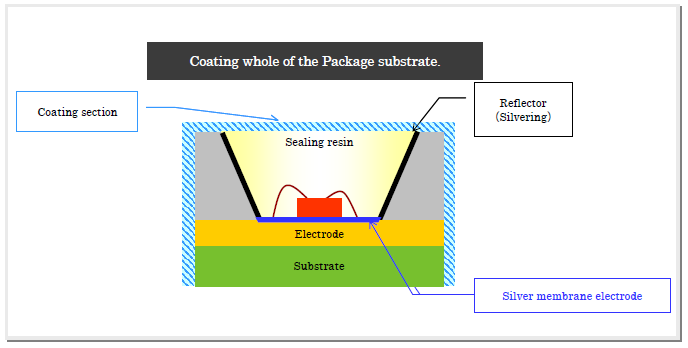
To solve this problem, Sil-More has introduced an anti-sulfurization coating developed by Noda Screen Company from Japan, which is a fluorine-based coating for the silver plating layer of LED reflectors. It can be applied using various coating methods on the surface of LED packages that are dried at room temperature, forming a transparent film with a thickness of about 5 microns and a refractive index of 1.44. In sulfurization experiments, there will be no corrosion or reduction in reflectivity and illuminance caused by silver plating sulfurization. In addition, even after a durability test at 150 degrees Celsius for 2000 hours, it will not yellow or become cloudy, ensuring its transparency. Furthermore, this material can be directly coated on the surface of packaged LEDs, allowing for the introduction of new materials without increasing engineering work. (The above information on anti-sulfurization coatings is sourced from Chemical Industry Daily/Materials World Network translation)
Fully Automatic Electrolytic Water Jet Glue Removal Equipment Easily RemoveIC/LEDExcess Glue!
Why is glue removal necessary? Glue removal (Deflash) is a part of the semiconductor packaging process, occurring after molding and before plating. The main purpose is to remove the excess glue (Flash) generated during the molding process without damaging the surface, ensuring the quality during plating.
Quality Differences Before and After Glue Removal
Process Workflow

Glue Removal Process Methods
Conductive Silver Paste The best choice for optimal conductivity
This issue will also provide a detailed introduction to the application of single-liquid conductive silver paste products composed of various resin binders and high-quality fine silver powder. This conductive silver paste not only has excellent adhesion for various substrates but also easily forms conductive circuits, with advantages such as low resistance, strong conductivity, and reasonable price.
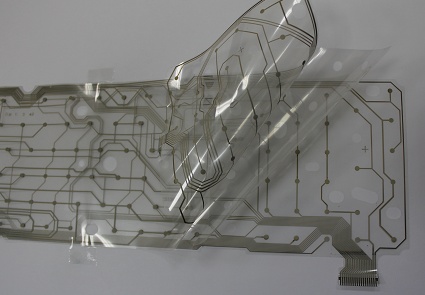
>>Conductive silver paste for membrane switches and FPC is a low-resistance product made from ultra-fine silver powder and low-temperature curing resin; it is suitable for membrane switches and soft board circuit printing, helping to improve the performance of printed materials. It is used on materials like PET, with stable quality and cost-effectiveness.
☆ Functional Features:It has a low resistance value, excellent adhesion to PET film, good flexibility, long shelf life, better workability, and good conductivity and printability.
>> Thermosetting printed conductive silver paste for touch panels, can be used to create conductive circuits on PET or ITO sheets.
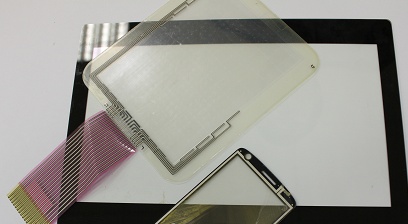
☆ Functional Features:With good electrical conductivity, adhesion, and bend resistance, the finest lines can reach (L/S; 50/50μm). Using high boiling point solvents allows for good continuous printing without the phenomenon of clogging, enabling the formation of high-quality fine line circuits. Laser silver paste can be used for patterning transparent conductive films such as ITO, carbon nanotubes (CNT), and silver nanowires (AgNW) through laser etching, combined with excellent software design capabilities to meet the requirements of low line width and high productivity, with the finest lines reaching (L/S; 30/30μm).
Global Automotive Declarable Substance List (GADSL)-Acting for the Earth
The main goals of automotive product development include enhancing product safety and reducing the negative environmental impact of vehicles throughout their lifecycle. To achieve these goals as much as possible, it is necessary to enhance consumer value in an efficient and cost-effective manner. The automotive manufacturing supply chain uses a large amount of construction, operation, and processing materials, and the selection and proper use of materials will have a significant impact on achieving the goals of enhancing product safety and reducing negative environmental impacts.

The 'Global Automotive Stakeholders Group (GASG)' is composed of representatives from three regions: the Americas, Europe/Africa/Middle East, and Asia/Pacific. All stakeholders in the automotive supply chain can become representatives of the 'Global Automotive Stakeholders Group (GASG)'. Six members are nominated from each of the three regions to form the supervisory body of the 'Global Automotive Stakeholders Group (GASG)', also known as the 'Steering Committee (SC)'. The Steering Committee (SC) meets at least once a year and formulates the Global Automotive Declarable Substance List (GADSL) in a transparent and open manner. The restricted substance list can be found in the attachment list on the GADSL website:http://plastics.americanchemistry.com/GADSL-Document
GADSL Substance Classification (Classification) meaning:
"P": Prohibited substances"D/P": Substances prohibited in certain applications, but may be used under specific conditions with declaration"D": Substances that must be declared if they exceed specified limit values
Detailed regulations are based on the latest announcements on the GADSL website. References:http://www.gadsl.org/
Visit record of branch colleagues to the Taiwan headquarters
This business trip involved six colleagues from the Dongguan and Kunshan branches coming to the Taiwan headquarters for the quarterly meeting. I am honored to be one of them. With the expectations and advice of all employees from the branch, I arrived at the beautiful island of Taiwan. With the care of my colleagues at the headquarters, I felt like I was back home, with a sense of belonging. Through interactions with my colleagues, I gained a lot and felt the strong cohesion and unity of our company.
Sil-More is a gradually maturing enterprise. It is not only an outstanding representative of trade agents but also a comprehensive enterprise with projects, product promotion, and production. Its branches have expanded from South China and East China to Thailand, gradually moving towards the world!
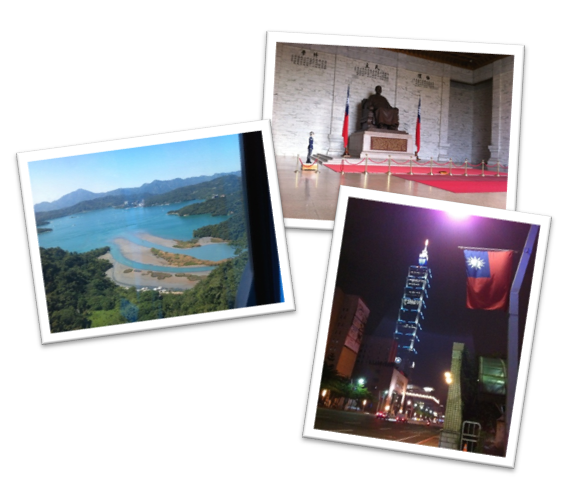
During the trip, I experienced Taiwan's political culture and cultural literacy; I admired the beautiful scenery I had longed for since childhood - Sun Moon Lake; I tasted various Taiwanese delicacies and fruits; I learned about betel nut trees... which broadened my horizons and increased my knowledge.
The company's arrangement this time is of great significance. It provides employees scattered across various locations with opportunities and platforms to learn from each other and share experiences. I hope more colleagues can participate, so that all the strength of our company can be united as one, moving towards a bright future.
According to a report by LEDinside in August, the impact of LED power supply on LED sulfurization was raised: when sulfurization occurs, lighting manufacturers first check the production, storage, and aging environment of the lamps, but overlook the built-in power supply of the lamps. There are twenty to thirty types of raw materials inside the LED power supply, which may also contain sulfur, chlorine, and bromine elements. In a closed, high-temperature environment, these sulfur, chlorine, and bromine elements may volatilize into gases and corrode the LED light source. Therefore, it is emphasized that LED lighting manufacturers should require power supply manufacturers to provide sulfur-free certification reports for LED power supplies.
This report is crucial for lighting manufacturers because the silver plating layer of the LED light source is prone to react with gases containing sulfur, chlorine, and bromine, resulting in black silver sulfide, silver chloride, and silver bromide, causing the lamp beads to turn black and fail.
High Transparency Fluorine-based New Coating
To solve this problem, Sil-More has introduced an anti-sulfurization coating developed by Noda Screen Company from Japan, which is a fluorine-based coating for the silver plating layer of LED reflectors. It can be applied using various coating methods on the surface of LED packages that are dried at room temperature, forming a transparent film with a thickness of about 5 microns and a refractive index of 1.44. In sulfurization experiments, there will be no corrosion or reduction in reflectivity and illuminance caused by silver plating sulfurization. In addition, even after a durability test at 150 degrees Celsius for 2000 hours, it will not yellow or become cloudy, ensuring its transparency. Furthermore, this material can be directly coated on the surface of packaged LEDs, allowing for the introduction of new materials without increasing engineering work. (The above information on anti-sulfurization coatings is sourced from Chemical Industry Daily/Materials World Network translation)
Image/ Provided by Noda Screen
Reference Source:http://www.ledinside.com.tw/news/20140814-29842.htmlhttp://www.materialsnet.com.tw/DocView.aspx?id=11688Fully Automatic Electrolytic Water Jet Glue Removal Equipment Easily RemoveIC/LEDExcess Glue!
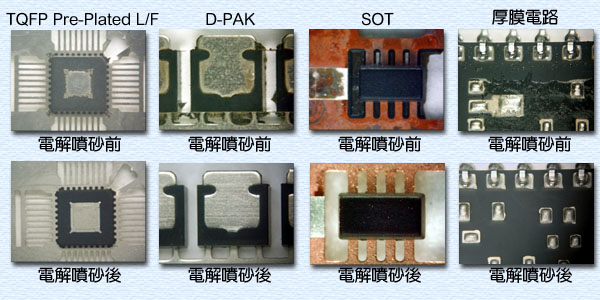
Why is glue removal necessary? Glue removal (Deflash) is a part of the semiconductor packaging process, occurring after molding and before plating. The main purpose is to remove the excess glue (Flash) generated during the molding process without damaging the surface, ensuring the quality during plating.
Quality Differences Before and After Glue Removal
Image/ Provided by Fuxin
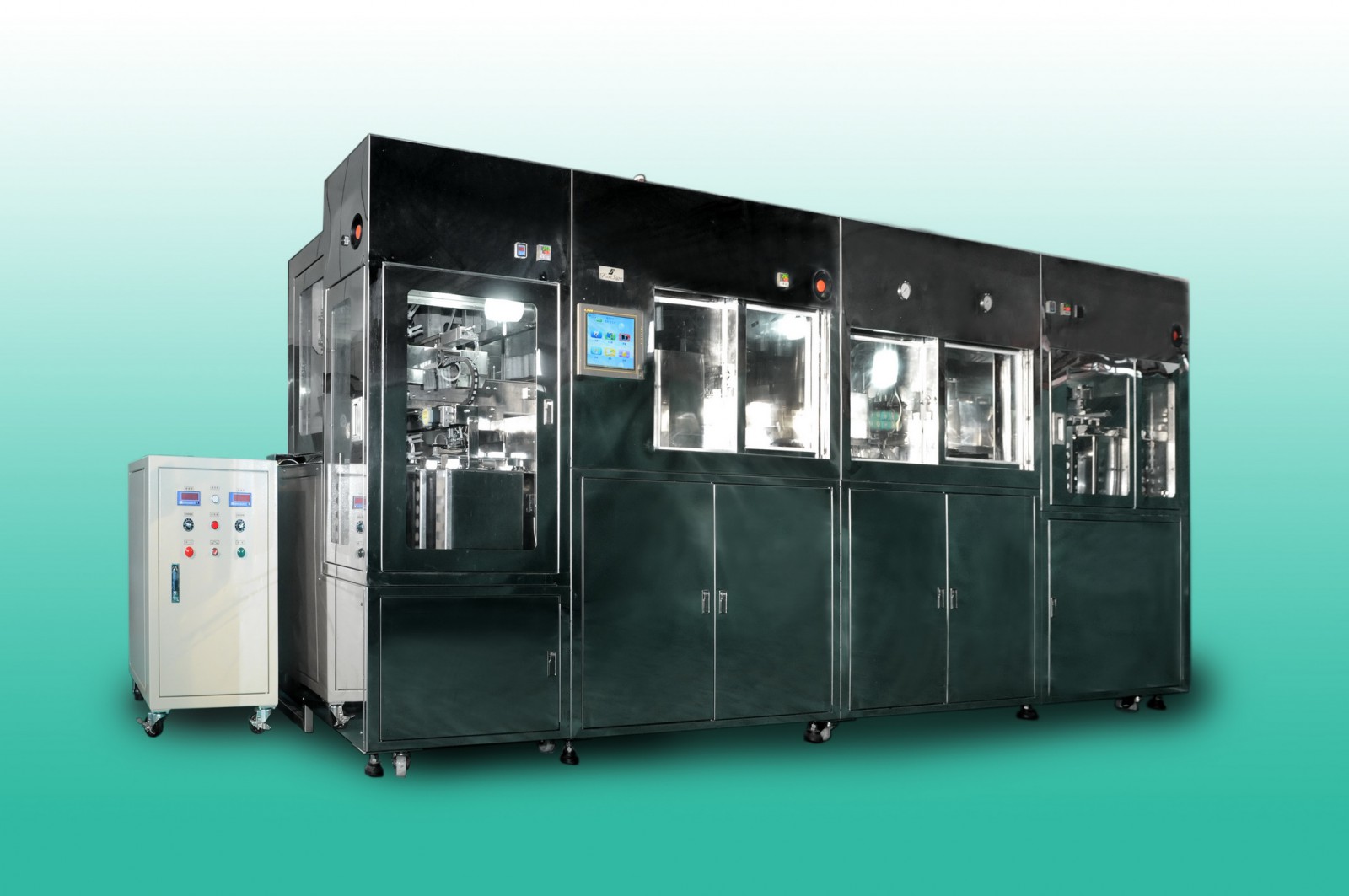
The smallest volume and fastest production speed Electrolysis & Water Jet Deflash Equipment is a fully functional model, the smallest in its class, with the electrolytic part being the smallest in the world, without affecting output. Coupled with a patented conveying device, it provides the most stable production conditions. In addition, it can adapt to materials of various sizes and configure water jet pressure according to needs, and can also choose full machine covering to reduce noise, encompassing water jet, wet blasting, electrolysis, soaking, and other related equipment, representing the most advanced technology in the world.Process Workflow
Glue Removal Process Methods
- Electrolytic Glue Removal (Electrolysis Deflash)-ED
- Chemical Soaking (Chemical Deflash)-CD
- Water Jet Glue Removal (Water Jet Deflash)-WJ
- Wet Blasting Glue Removal (Wet Blasting Deflash)-WB
Conductive Silver Paste The best choice for optimal conductivity
This issue will also provide a detailed introduction to the application of single-liquid conductive silver paste products composed of various resin binders and high-quality fine silver powder. This conductive silver paste not only has excellent adhesion for various substrates but also easily forms conductive circuits, with advantages such as low resistance, strong conductivity, and reasonable price.
>>Conductive silver paste for membrane switches and FPC is a low-resistance product made from ultra-fine silver powder and low-temperature curing resin; it is suitable for membrane switches and soft board circuit printing, helping to improve the performance of printed materials. It is used on materials like PET, with stable quality and cost-effectiveness.
☆ Functional Features:It has a low resistance value, excellent adhesion to PET film, good flexibility, long shelf life, better workability, and good conductivity and printability.
| Model | Viscosity | Hardness | Resistance | Curing Conditions | Characteristics |
| AF-100-50 | 250 d・pas | 2H | 10-4Ω-cm | 120℃×30 minutes | Low silver content, good adhesion and flexibility |
| AF-100 A-60 | 170 d・pas | 2H | 10-5Ω-cm | 120℃×30 minutes | High reliability, good adhesion and flexibility |
☆ Functional Features:With good electrical conductivity, adhesion, and bend resistance, the finest lines can reach (L/S; 50/50μm). Using high boiling point solvents allows for good continuous printing without the phenomenon of clogging, enabling the formation of high-quality fine line circuits. Laser silver paste can be used for patterning transparent conductive films such as ITO, carbon nanotubes (CNT), and silver nanowires (AgNW) through laser etching, combined with excellent software design capabilities to meet the requirements of low line width and high productivity, with the finest lines reaching (L/S; 30/30μm).
| Model | Viscosity | Hardness | Resistance | Curing Conditions | Characteristics |
| AF-130 TP-65 | 350 d・pas | 2H | 10-5Ω-cm | 150℃×30 minutes | Suitable for resistive applications, with high reliability. |
| AF-130 GPT | 350 d・pas | 2H | 10-5Ω-cm | 150℃×30 minutes | Compatible with Glass/PET ・ Good conductivity |
| AF-130 TPF | 650 d・pas | 2H | 10-4Ω-cm | 150℃×30 minutes | For fine circuits, good adhesion/hardness. |
| AF-130 LTP | 400 d・pas | 2H | 10-5Ω-cm | 150℃×30 minutes | For laser processing ・ Good adhesion |
The main goals of automotive product development include enhancing product safety and reducing the negative environmental impact of vehicles throughout their lifecycle. To achieve these goals as much as possible, it is necessary to enhance consumer value in an efficient and cost-effective manner. The automotive manufacturing supply chain uses a large amount of construction, operation, and processing materials, and the selection and proper use of materials will have a significant impact on achieving the goals of enhancing product safety and reducing negative environmental impacts.
The 'Global Automotive Stakeholders Group (GASG)' is composed of representatives from three regions: the Americas, Europe/Africa/Middle East, and Asia/Pacific. All stakeholders in the automotive supply chain can become representatives of the 'Global Automotive Stakeholders Group (GASG)'. Six members are nominated from each of the three regions to form the supervisory body of the 'Global Automotive Stakeholders Group (GASG)', also known as the 'Steering Committee (SC)'. The Steering Committee (SC) meets at least once a year and formulates the Global Automotive Declarable Substance List (GADSL) in a transparent and open manner. The restricted substance list can be found in the attachment list on the GADSL website:http://plastics.americanchemistry.com/GADSL-Document
GADSL Substance Classification (Classification) meaning:
"P": Prohibited substances"D/P": Substances prohibited in certain applications, but may be used under specific conditions with declaration"D": Substances that must be declared if they exceed specified limit values
Detailed regulations are based on the latest announcements on the GADSL website. References:http://www.gadsl.org/
Visit record of branch colleagues to the Taiwan headquarters
This business trip involved six colleagues from the Dongguan and Kunshan branches coming to the Taiwan headquarters for the quarterly meeting. I am honored to be one of them. With the expectations and advice of all employees from the branch, I arrived at the beautiful island of Taiwan. With the care of my colleagues at the headquarters, I felt like I was back home, with a sense of belonging. Through interactions with my colleagues, I gained a lot and felt the strong cohesion and unity of our company.
Sil-More is a gradually maturing enterprise. It is not only an outstanding representative of trade agents but also a comprehensive enterprise with projects, product promotion, and production. Its branches have expanded from South China and East China to Thailand, gradually moving towards the world!
During the trip, I experienced Taiwan's political culture and cultural literacy; I admired the beautiful scenery I had longed for since childhood - Sun Moon Lake; I tasted various Taiwanese delicacies and fruits; I learned about betel nut trees... which broadened my horizons and increased my knowledge.
The company's arrangement this time is of great significance. It provides employees scattered across various locations with opportunities and platforms to learn from each other and share experiences. I hope more colleagues can participate, so that all the strength of our company can be united as one, moving towards a bright future.
Copywriter / Xu Yan, Yang Zhao Di

China Kunshan Subsidiary
TEL:+86-512-5778-9977
FAX:+86-512-5778-9944
E-Mail:silmore@silmore.com.cn
Website:http://www.silmore.cn/
Address: 13th Floor, Building 4, Chengbei Lake Commercial Center, 1188 Chengbei Road, Yushan Town, Kunshan City, Jiangsu Province, 215300
China Dongguan Subsidiary
TEL:+86-769-8541-8158
FAX:+86-769-8541-9158
E-Mail:service@silmore.com.cn
Website:http://www.silmore.cn/
Address: No.8 Huafu Road, Shangsha No.6 Industrial Zone, Chang 'an Town, Dongguan City, Guangdong Province, China 523000