

Sil-More Newsletter - Issue 6: The Key to the Emergence of Supercapacitors - Graphene
2015/05/12Subscribe to the newsletter

Application of graphene in supercapacitors
 Application of graphene in supercapacitors
Supercapacitors are electrochemical energy storage devices that lie between traditional capacitors and secondary batteries, featuring high energy density, high power density, long cycle life, rapid charge and discharge, pollution-free, maintenance-free, and a wide temperature range. Therefore, they have great application value and market potential in various fields such as automotive, power, railways, communications, military, industrial applications, and consumer electronics.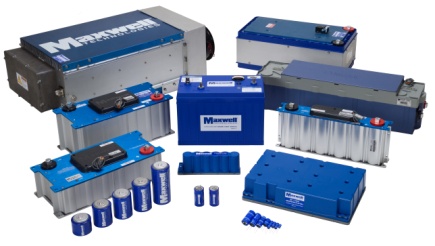
Supercapacitors can be divided into electric double layer capacitors and Faradaic capacitors.Electric double layer capacitors (EDLCs)
The energy storage principle of electric double layer capacitors is based on the adsorption of opposite charges of positive and negative ions at the interface of carbon material electrodes with a large specific surface area and the electrolyte. The charge is stored in the interface double layer, and energy is stored and released through reversible electrochemical polarization and adsorption/desorption. The electrodes of electric double layer capacitors are mainly made of porous carbon materials, such as activated carbon, graphene, mesoporous carbon, and carbide-derived carbon, with performance factors mainly including material specific surface area, conductivity, and porosity.
Faradaic capacitors (pseudo-capacitors)
The energy storage principle of pseudo-capacitors involves rapid reversible redox reactions occurring at the surface of electrodes with redox-active materials, storing and releasing energy through reactions between the electrode and the electrolyte. The electrode materials for this type of capacitor mainly include materials with redox-active potential on their surfaces, such as conductive polymers, metal oxides, or metal hydroxides. Pseudo-capacitors have a larger capacity than electric double layer capacitors, but due to the poor conductivity of the materials, the structure is easily damaged during redox reactions, resulting in relatively poor energy density and cycle performance.
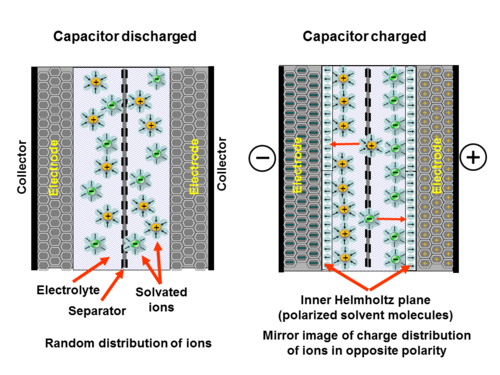
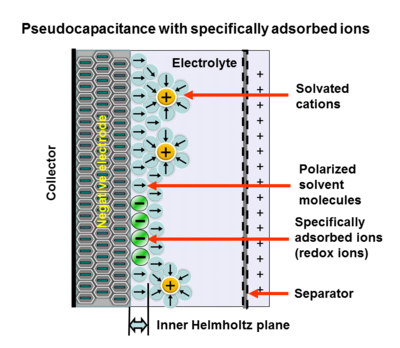
Figure 1. Electric double layer capacitor / Figure 2. Pseudo-capacitor
Graphene is a single-layer sheet structure carbon material composed of carbon atoms, with a large specific surface area, excellent electrical/thermal conductivity, and mechanical strength, meeting the requirements of supercapacitors for electrode materials with high energy density and high power density. In addition, graphene as an electrode material can not only improve specific capacitance but also achieve rapid charge and discharge and increase cycle life. Therefore, supercapacitors made of graphene will play a crucial role in the future development of the electric vehicle industry.
Data source:
1. Yang Dezhi, Shen Jiani, Yang Xiaowei & Ma Zifeng (2014) Research progress on graphene-based supercapacitors, Energy Storage Science and Technology, (3)1.
2. Hong Wuqing, Zhang Qinliang & Wang Yuping (2014) Research on the application of graphene in supercapacitors, New Quarterly, (42)1.
3. Zhang Dongguang (2013) Development of supercapacitors, iPhone 5-second charging is promising, Epoch Times.
Website:
http://www.epochtimes.com/b5/13/3/6/n3815610.htm%E7%A0%94%E7%99%BC%E8%B6%85%E7%B4%9A%E9%9B%BB%E5%AE%B9iPhone%E4%BA%94%E7%A7%92%E5%85%85%E9%9B%BB%E6%9C%89%E6%9C%9B.html
4. Wu Xiandong, Senior Industry Consultant of MIC (2015) Wearable device power-saving savior: graphene, China Times Electronic News.
Website:
http://buzzorange.com/techorange/2014/11/25/your-next-electric-car-may-not-even-need-battery/
Image source:http://en.wikipedia.org/wiki/Supercapacitor
The LED industry shines with cutting-edge materials
LEDs have the advantages of high brightness and low power consumption. When used as a light source, LEDs can effectively reduce power consumption and carbon dioxide emissions. Therefore, under the growing global awareness of environmental protection, LED-based lighting devices and backlight modules have become mainstream in the market. Due to the rapid expansion of demand and application for LED products in the overall market, the continuous evolution of materials and packaging technology, the development of LEDs towards high power and high brightness has become an inevitable trend in the industry. The growth of the high-power white LED market is particularly evident, as LEDs convert only 20% of energy into light but 80% into heat. If heat cannot be quickly and effectively dissipated, the high temperature generated when LEDs are lit will rapidly reduce the lifespan of LED chips, causing issues with LED reliability and brightness decay. To maintain good lifespan and luminous efficiency, the thermal design of LEDs has become a critical issue that needs to be addressed.As the brightness of LEDs increases, the issue of heat dissipation has become a prominent topic. Materials with low thermal resistance and high heat dissipation can transfer LED thermal energy to heat dissipation components in real-time, quickly reducing LED temperature, thereby enhancing LED brightness and lifespan.
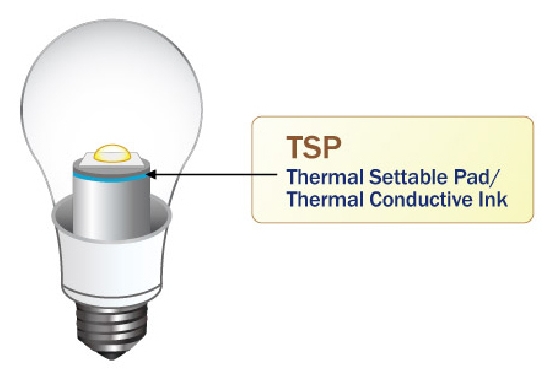
TSP (Thermal Settable Pad) low thermal resistance heat dissipation pad
Product application: Thermal conductive and insulating filling adhesive material between MCPCB and heat sink.
Advantages
- Strong adhesion after curing, no need for screws.
- Low thermal resistance (high thermal conductivity) characteristics.
- Good voltage resistance characteristics.
- Fills interface gaps to reduce interface thermal resistance.
- Suitable for full-surface light or designs with spatial limitations.
- Good operability.
- Long-term reliability characteristics.
- Complete UL (NO: E351863) certification
- Complies with RoHS standards
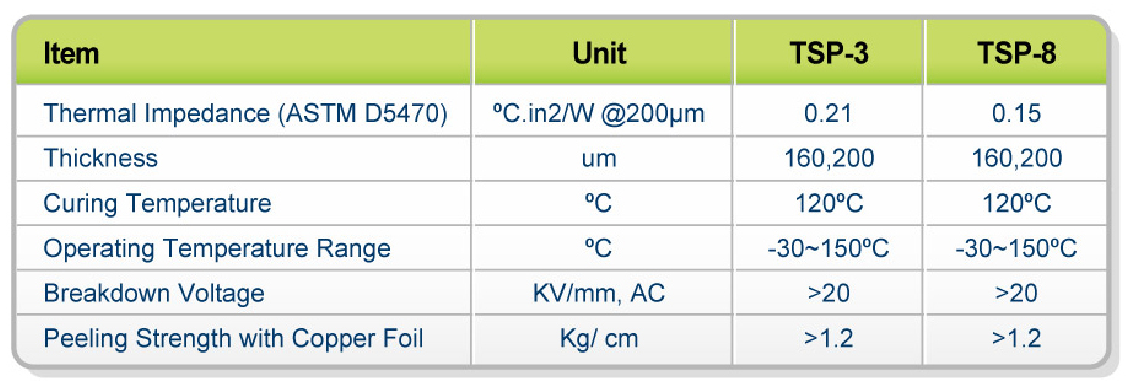
TRM high-efficiency heat dissipation coating material
Product application: Coating products that enhance the thermal radiation effect of heat dissipation fins; product type: spray paint
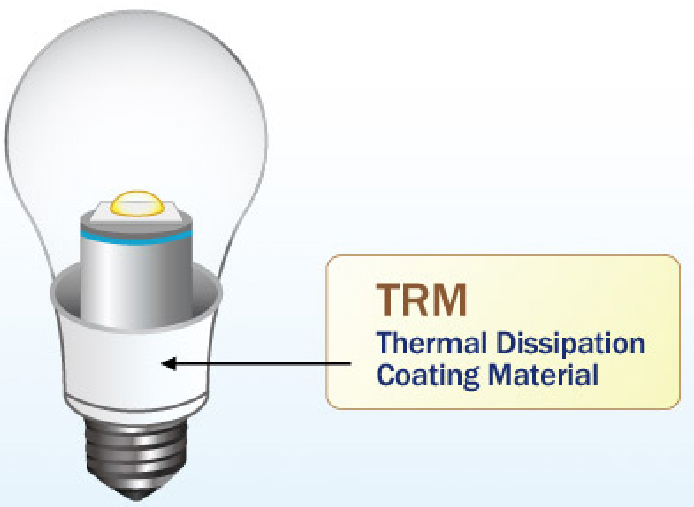
Product characteristics
- Combines high thermal conductivity and high IR characteristics, significantly improving radiation efficiency
- Adjustable colors to meet different application processing needs
- Easy to process, reduces fin weight
- Independently developed and produced, with high cost performance
- Passed strict reliability testing
- Complies with RoHS standards
Super strong performance epoxy resin TPMS ring test ALL PASS
TPMSTire Pressure Monitoring System"Tire Pressure Monitoring System", mainly used in vehicles to automatically monitor and alert in real-time for low tire pressure, high tire pressure, rapid air leakage, and high tire temperature, providing effective information to drivers to maintain sufficient tire pressure. When tire pressure deviates from the normal range, it transmits the values to the dashboard via wireless signals, illuminating a red light to alert the driver, preventing tire blowout accidents, increasing driving safety, and reducing additional fuel consumption due to insufficient tire pressure, while extending tire lifespan.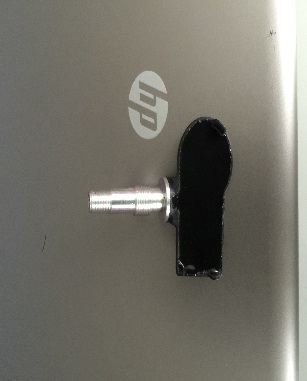
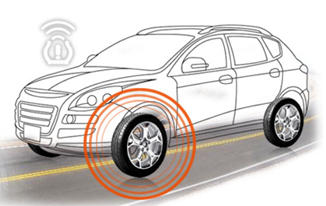
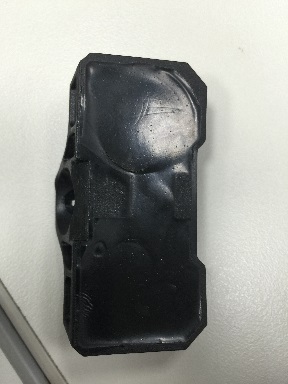
The Ministry of Transportation stipulates that as of November 1, 2014, new vehicles must be equipped with TPMS tire pressure detectors. The tire pressure detector mainly consists of a plastic housing, pressure sensing components, and epoxy resin for encapsulation. The main reliability testing conditions are: -40~125℃ cold and hot cycling, must pass 1000 CYCLE adhesive material temperature range -40~120℃. For plastic PA66+30% glass fiber material, it must have better adhesion performance, and sharp angles of the housing should avoid adhesive cracking.
Sil-More thanks customers for cooperating in testing and continuously adjusting adhesive material performance in R&D, such as requiring low reaction shrinkage and high toughness of the adhesive. These fine-tuning considerations must take into account the overall characteristics of the adhesive material, including good operability, and viscosity should not be increased to avoid bubble issues, which would affect overall reliability. Ultimately, the EPO-SIL EF473A1/EF473B1 series products successfully passed the stringent environmental testing conditions for TPMS.Silicone resin curing reaction experiment
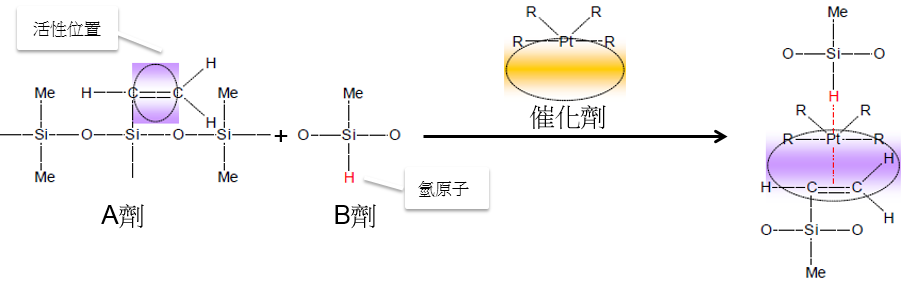
Silicone resin (Silicone) has many curing methods, one of which uses organometallic compounds as catalysts, catalyzing active agents, usually as the main agent A, and hardeners containing hydrogen atoms, usually as agent B, to undergo curing reactions. Typically, the main agent and hardener are mixed in a molar ratio of11:1 for the reaction (Figure 1).Note 1: Molar number = mass / molecular weight
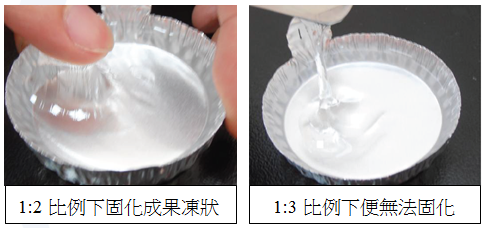
Generally, manufacturers adjust the reaction ratio in advance for consumer convenience, mixing by mass ratio, allowing consumers to simply follow the manufacturer's recommendation to add a fixed mass ratio of AB agents without needing to calculate complex formulas, avoiding unnecessary complications in the process. For example, DOW CORNING SE 1740 is normally mixed in a mass ratio of 1:1. When the ratio is adjusted to 2:1 or 1:2, the excess main agent or hardener cannot find a pair to react, resulting in a decrease in the hardness of the gel (Figure 2). When the ratio is adjusted to 1:3 or 3:1, the significant difference in ratios makes molecular collisions more difficult, making the curing reaction even harder to proceed (Figure 3). Therefore, in the curing reaction of silicone resin, it is not the case that the more hardener added, the harder it becomes; the composition and ratio of the adhesive material itself must also be considered to achieve the highest possible hardness.
Recent exhibition activities

─Written by: Marketing DepartmentGO TOP


China Kunshan Subsidiary
TEL:+86-512-5778-9977
FAX:+86-512-5778-9944
E-Mail:silmore@silmore.com.cn
Website:http://www.silmore.cn/
Address: 13th Floor, Building 4, Chengbei Lake Commercial Center, 1188 Chengbei Road, Yushan Town, Kunshan City, Jiangsu Province, 215300
China Dongguan Subsidiary
TEL:+86-769-8541-8158
FAX:+86-769-8541-9158
E-Mail:service@silmore.com.cn
Website:http://www.silmore.cn/
Address: No.8 Huafu Road, Shangsha No.6 Industrial Zone, Chang 'an Town, Dongguan City, Guangdong Province, China 523000